Back to school season is well underway, but there’s always that part of me that’s just not ready to say good-bye to summer yet. When I think of my “happy places,” the beach is high up on the list. There are few places I’d rather be than lounging in front of the ocean, while watching my 4 and 2 year old play in the sand. Now that school has started I can’t exactly hit the beach whenever I please, so I like to give my classroom some beachy touches here and there to help make it my happy place away from home. I even found an excuse to add some beachiness (is this even a real word?) to a math lesson this past week.
My new batch of second graders is working on basic addition strategies, and we recently reviewed the commutative property of addition from first grade. You might also know this as number bonds or fact families.
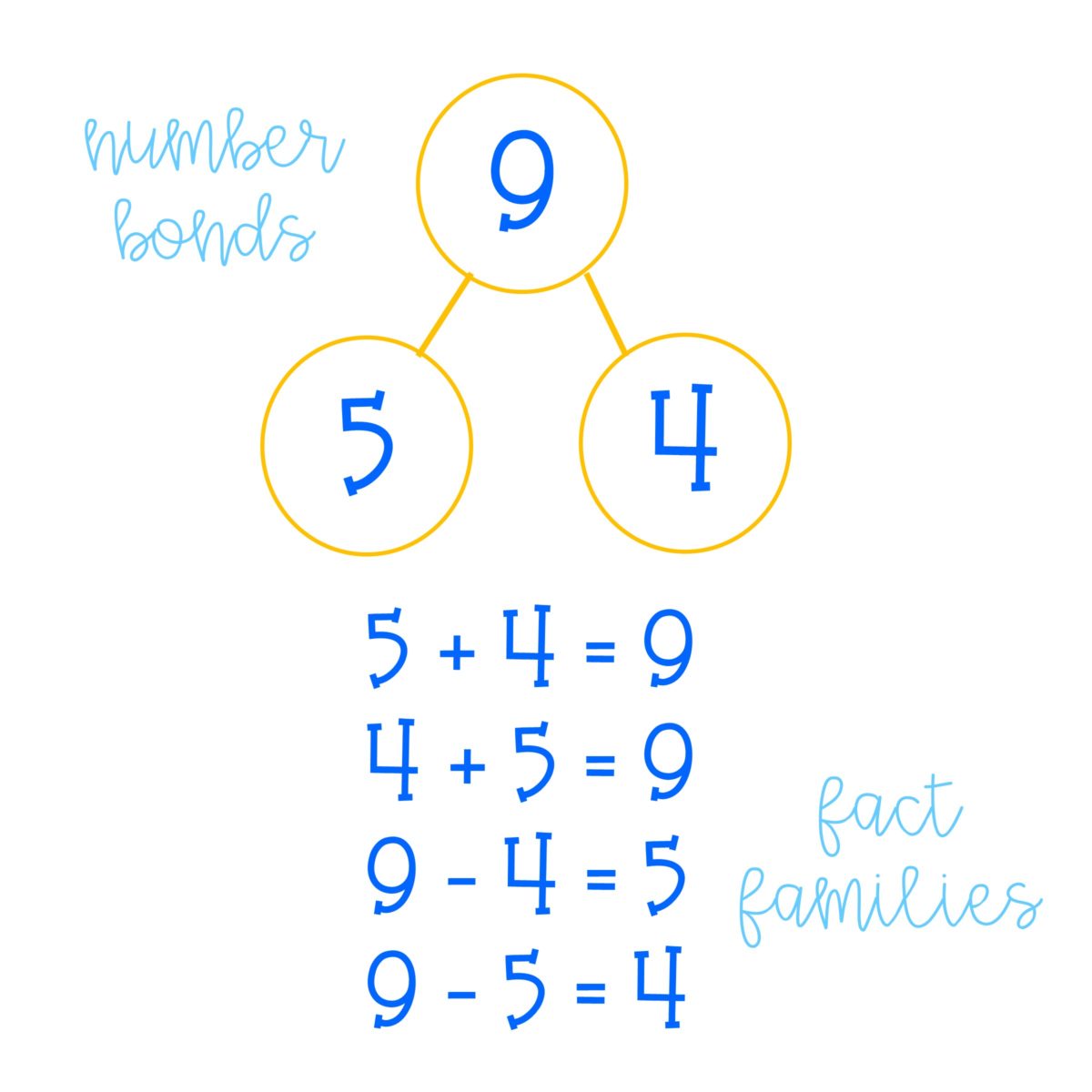
I gave each student a number card (the numbers ranged from 3 to 18) and connecting cubes, and they had to find 2 addends that could equal that sum. Then they had to switch the order of those addends and confirm whether or not they would get the same answer.
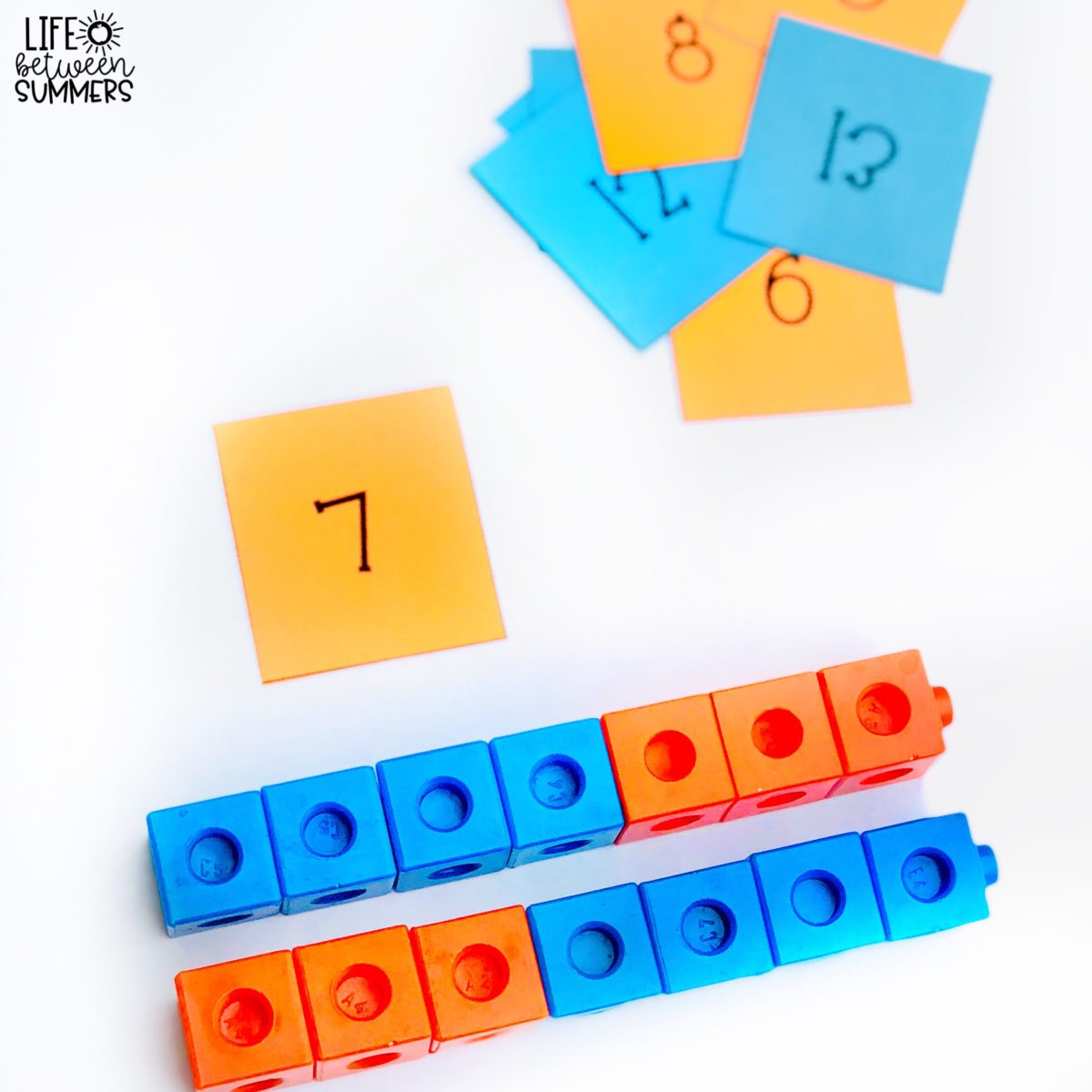
Since these types of problems require flip flopping the addends to get the same sum, you may have also heard them referred to as “flip flop facts.”
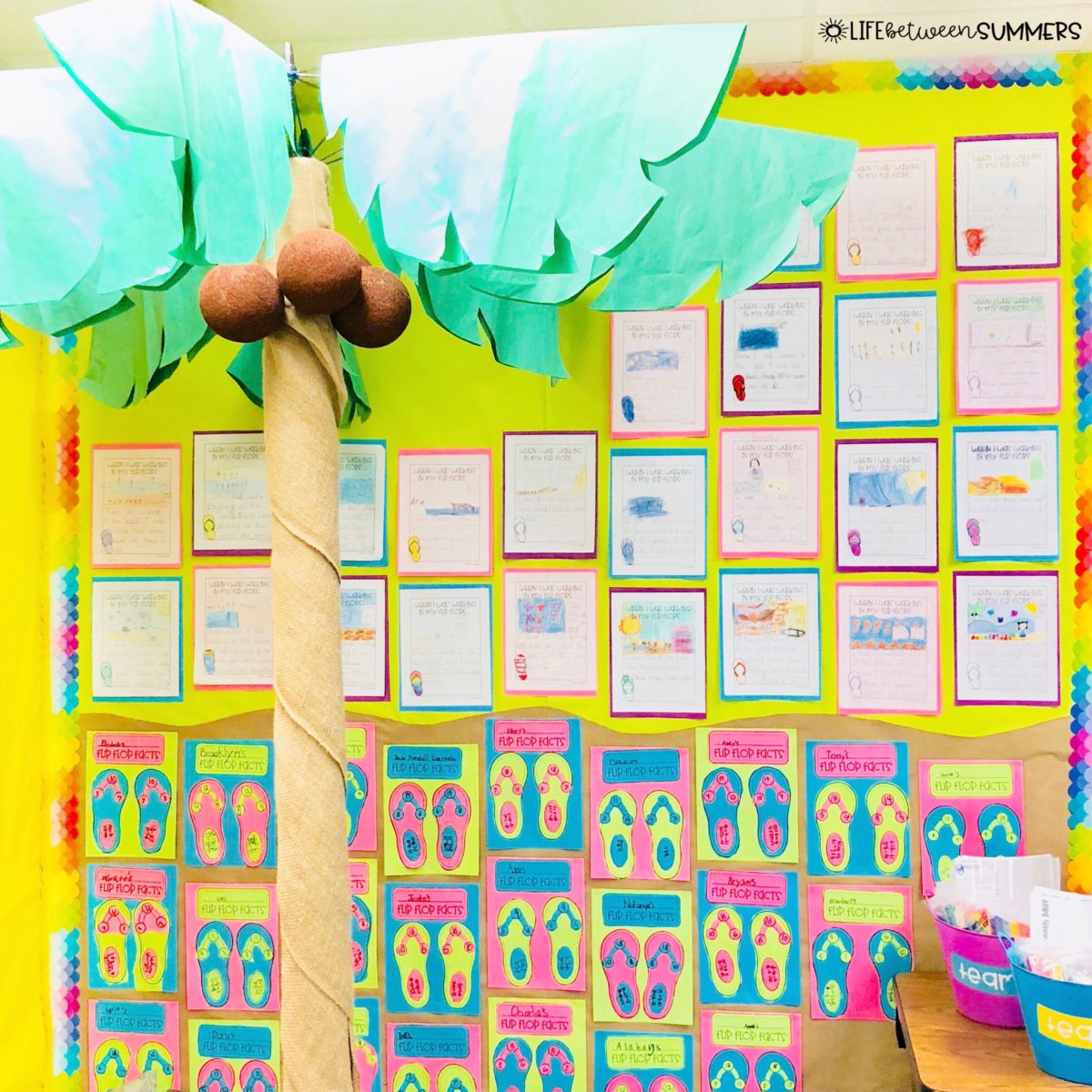
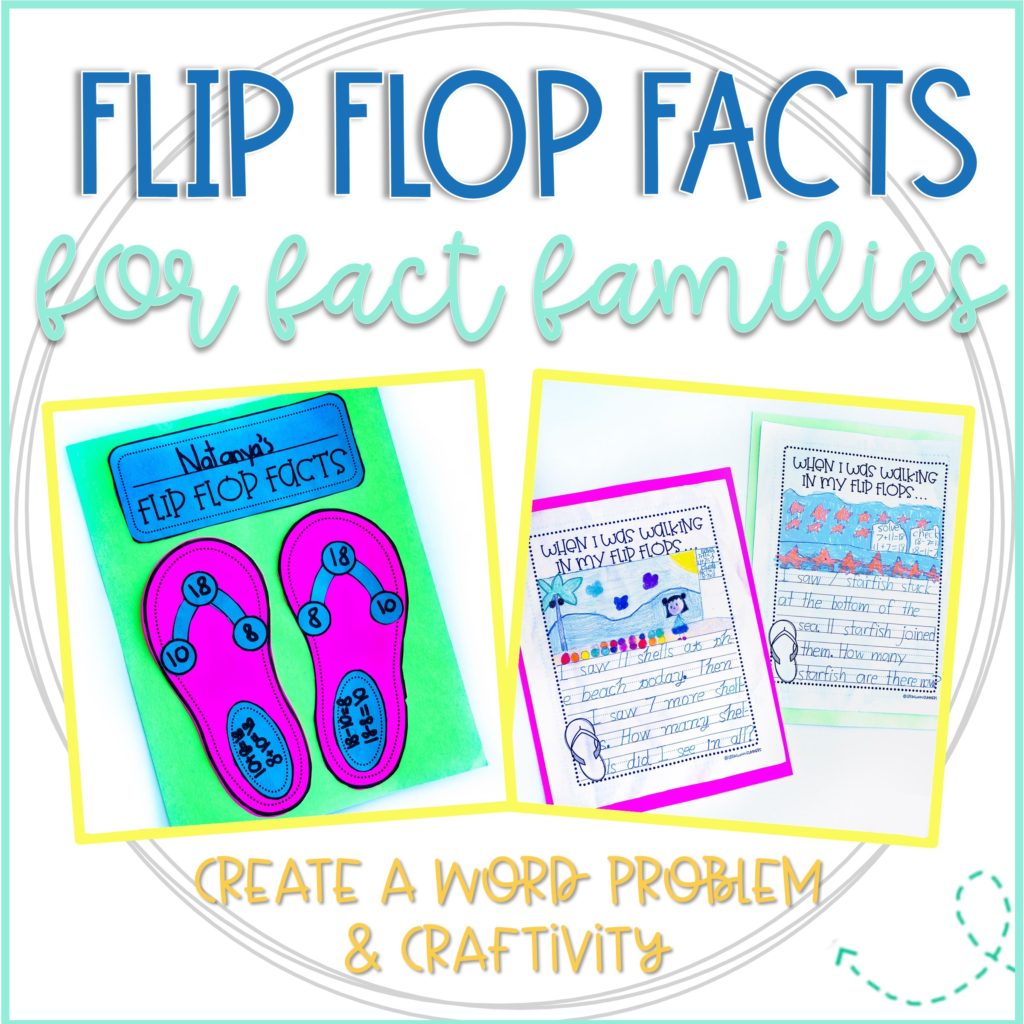
I know a beachy opportunity when I hear one! I had the kids practice their flip flop facts by making these little flip flops (with straps that resemble number bonds):
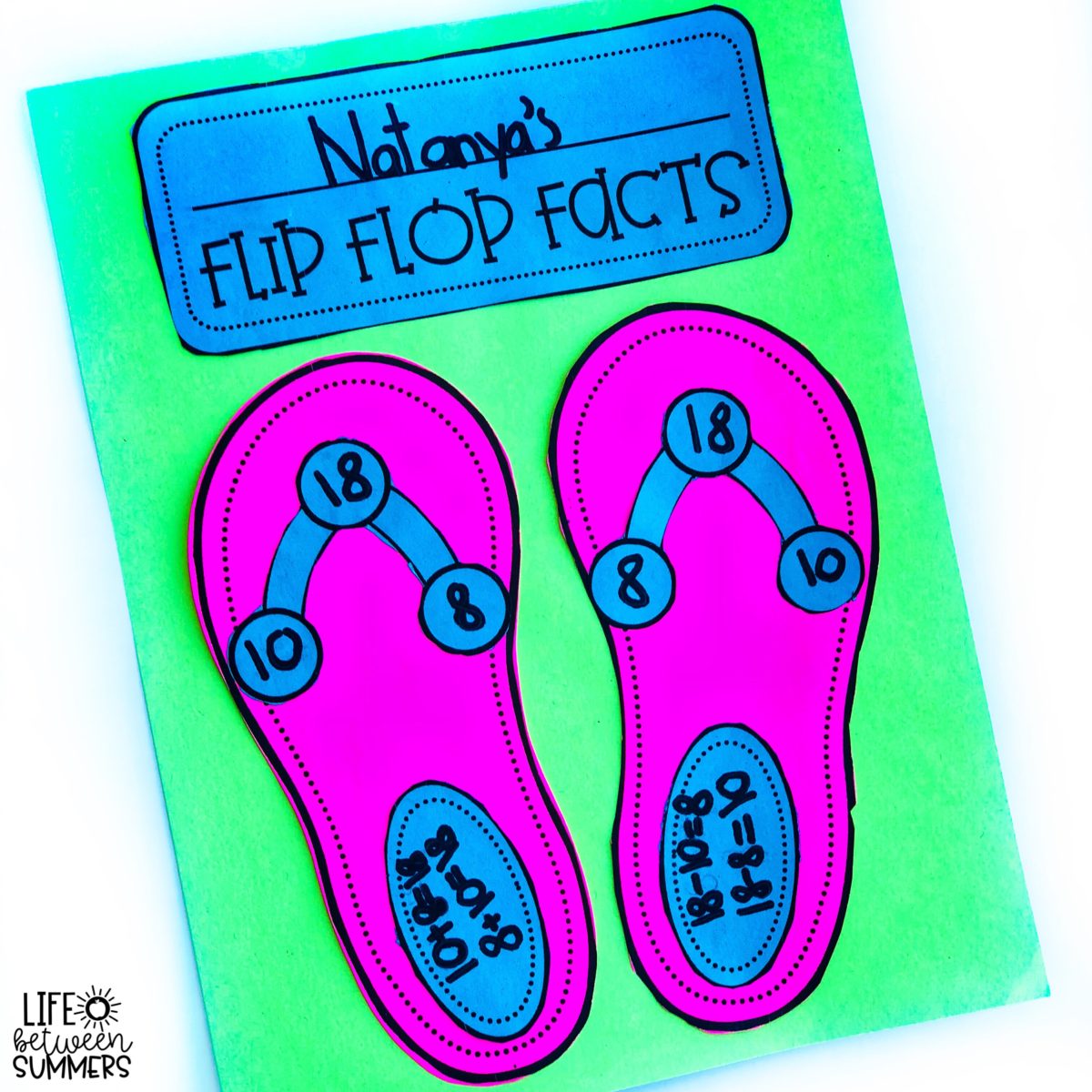
I like to incorporate writing with math when possible, so we built upon the flip flop craftivity by having the kids write their own word problems. I provided them with the sentence starter, “When I Was Walking in my Flip Flops…” and we brainstormed ideas of what they might see while walking in flip flops. They came up with everything from different ocean animals to pool floaties to hot dogs at a BBQ.
Complete side note: This week, Hurricane Lane (which was thankfully downgraded to a tropical storm) was making its way through Hawaii, where a lot of my family resides. As prayers were being sent and everyone was prepping their homes, one of my aunties shared this photo of “how locals prepare for a hurricane” with the hashtag #notgonnalosemyrubbahslippahs. Despite the worry for all of their safety, this did put a smile on my face.

Gotta make sure to try and save your essentials, right? (in all seriousness though, thank you for sending positive thoughts to all in Hawaii who may be effected by the storm).
Back to the math lesson. Luckily, “hurricane” wasn’t on the list of what the kids might see when walking in their flip flops. The kids took the ideas they had brainstormed, and created summery-themed word problems to match the number sentences on their craftivity.
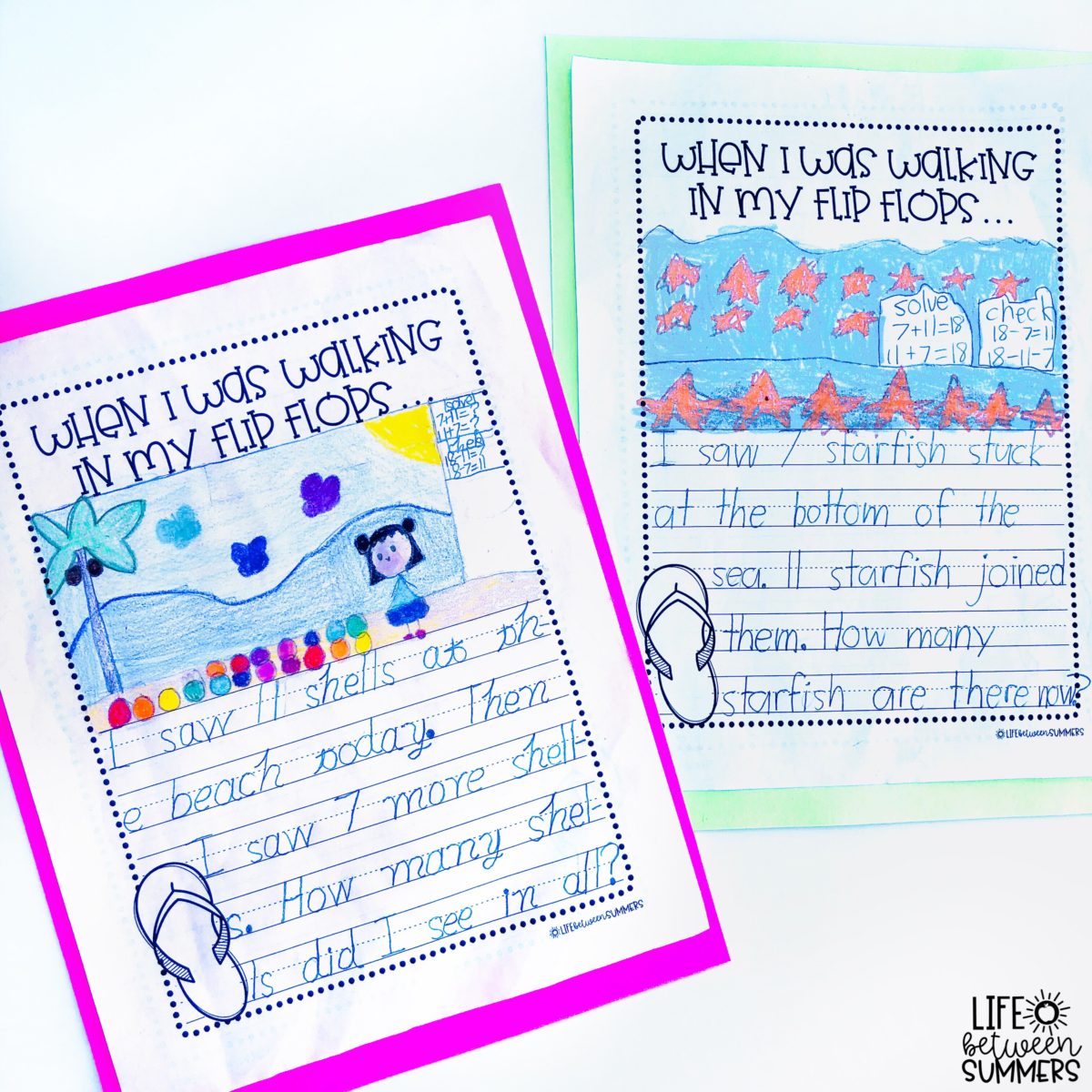

Solving word problems can be a challenge, and writing their own required an even higher level of thinking and rigor. During this early stage of the school year, it told me a lot about their mathematical understanding and thinking processes as I got to see them work through the creation of these problems.
As an added bonus, these activities made for a fun tropical-themed bulletin board. Like I said, I wasn’t quite ready for summer to end, so I’m not mad about having this displayed in our classroom.
If you’re interested in doing these flip flop activities with your own kiddos, you can get the template and word problem writing paper right here in my online store or on Teachers Pay Teachers.
Beachiness + Math = A Fun Way to Learn
and
Math + Beachiness = A Fun Way to Learn
No matter how you flip flop it!