The first few weeks of school are all about setting the foundation. We’re establishing routines and procedures, encouraging a growth mindset culture, building classroom community, etc. I also like to spend some time laying the foundation for what students will need to be successful writers throughout the year, especially since writing is a focus that threads through all subject areas. In second grade especially, sentence structure is a great place to start. We review the 4 parts that every sentence has to have in order to be a complete sentence:
- A capital at the beginning of the sentence
- Punctuation at the end of the sentence
- A subject
- A predicate
To teach subject and predicate, you can start out with an interactive lesson. One idea is to give each student half of a sentence strip that is missing the other half of the sentence. When doing this in my own class, I told the kids that I had purposely made some spelling, capitalization, and punctuation errors in my writing, and that they would get to find out why later on (ooh, the suspense)! Students had to walk around the room with their piece of the sentence strip and find a partner that they could form a complete sentence with. We discussed that if the sentence was super silly or didn’t make sense, they would have to keep looking until they found their partner.
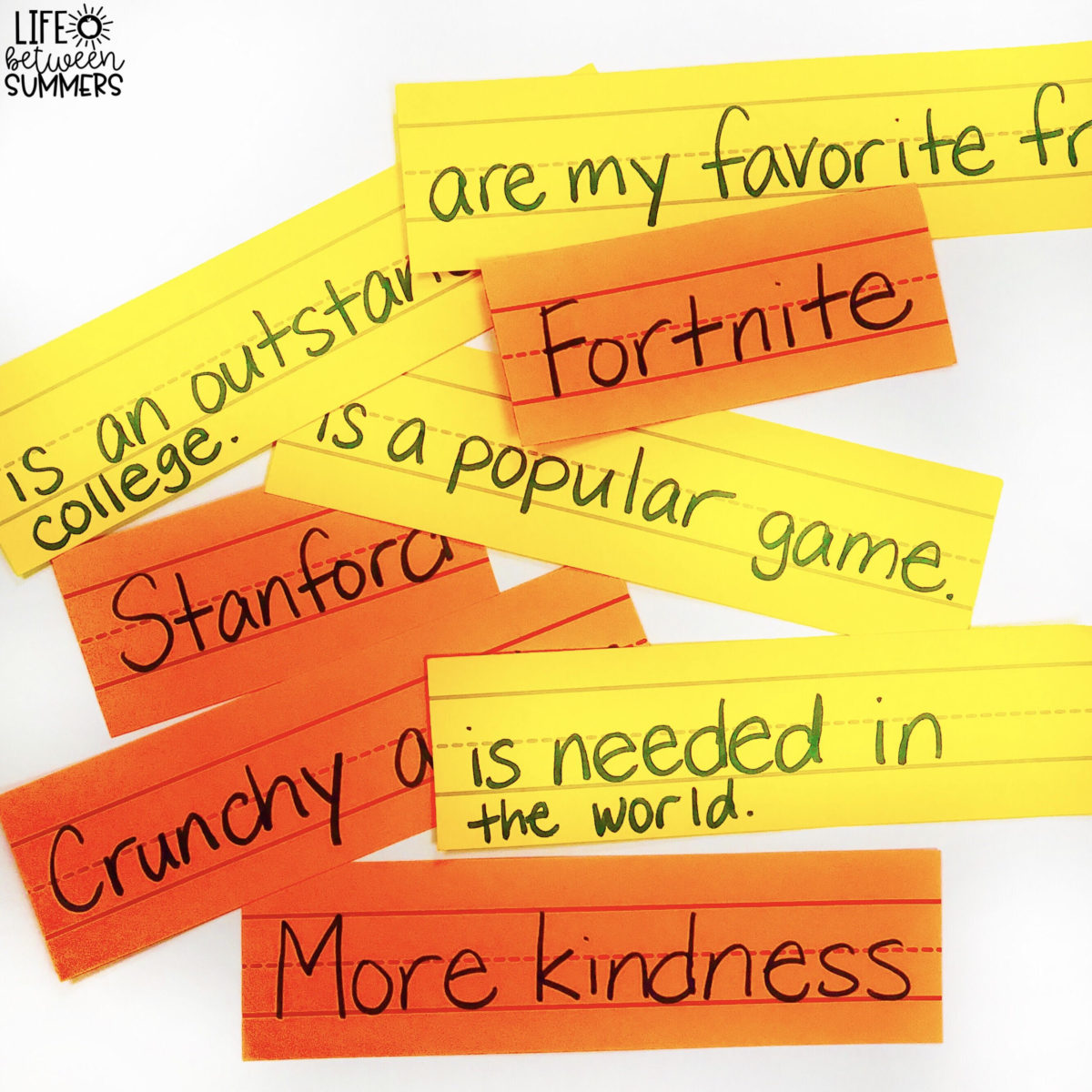
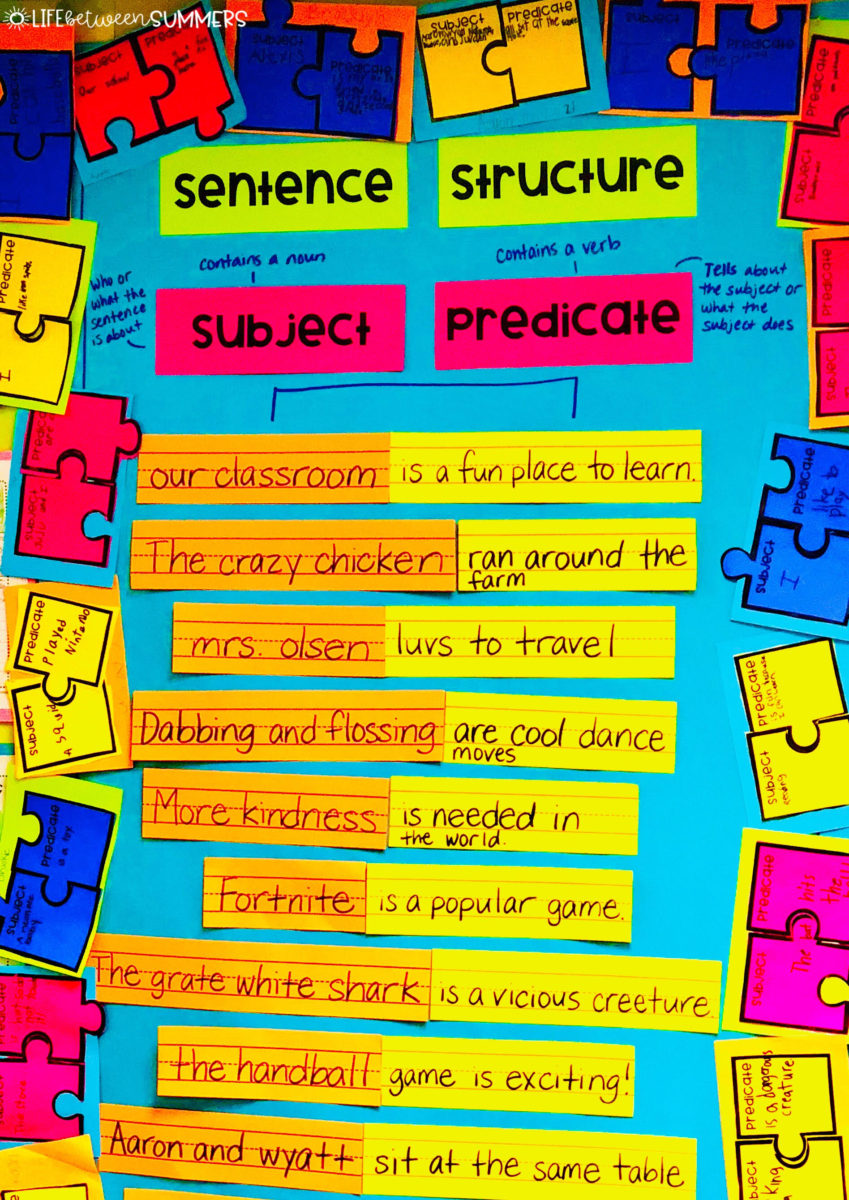
Then we gathered back up as a whole group and had partners share the complete sentences they had formed in front of the class. We stuck the sentences together up on a chart.

Then I asked them to brainstorm what they noticed about the orange parts of the sentence strips and if they had anything in common. Some of the answers they came up with:
- They have animals
- They have people
- They have things
- They have nouns (woo hoo! way to go, kiddo)
This led us into a discussion about how every sentence has a subject, which tells who or what the sentence is about. Then we discussed ideas about what the yellow sentence strips had in common. Their responses:
- They have places
- A lot of them say “is” or “are” at the beginning
- They have actions (no one came up with verb yet, but we’ll get there)
We talked about how this part of a sentence is called the predicate, which tells about the subject or what the subject does.
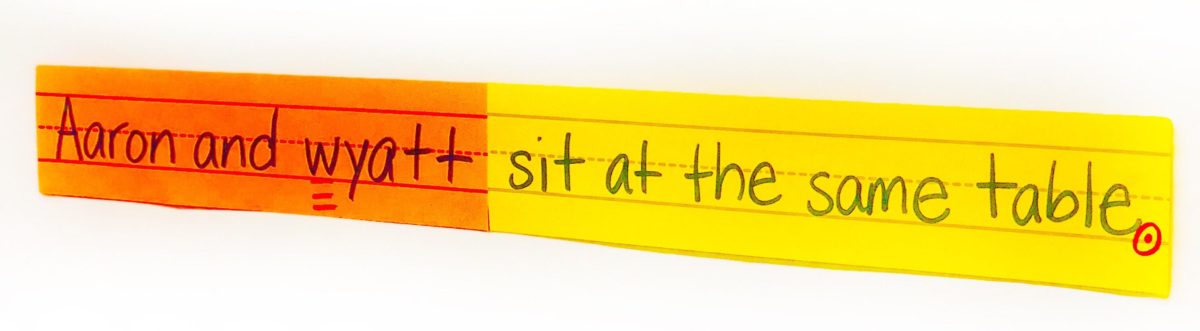
Still wondering why I made spelling and punctuation errors in the sentences? Following the introductory lesson, we revisited these sentences (about one per day). Not only was it a good opportunity to quickly review subject and predicate, but we were also able to focus on the other two parts that a complete sentence has to have.
We worked together as a class to edit capitalization and punctuation with editing marks. I pointed out that good writers check their sentences for correct spelling too, so we also edited any incorrect spelling that they found. It made for a nice little intro to all of the editing and revising that they would be doing in writing all year.
You may also be wondering about the Post-It notes that are stuck around the poster. If you’re familiar with Thinking Maps, this is the frame of reference. I closed this Day 1 lesson by posing a question and having students write their reflection on a sticky note.

After this first lesson, we continued to practice throughout the week with various subject and predicate activities. Many of them involved puzzle piece templates to show how a subject and predicate fit together to form a sentence.
We used mini puzzle pieces for memory and matching games at a literacy center. Students had to match up the subjects and predicates to create sentences that made sense.
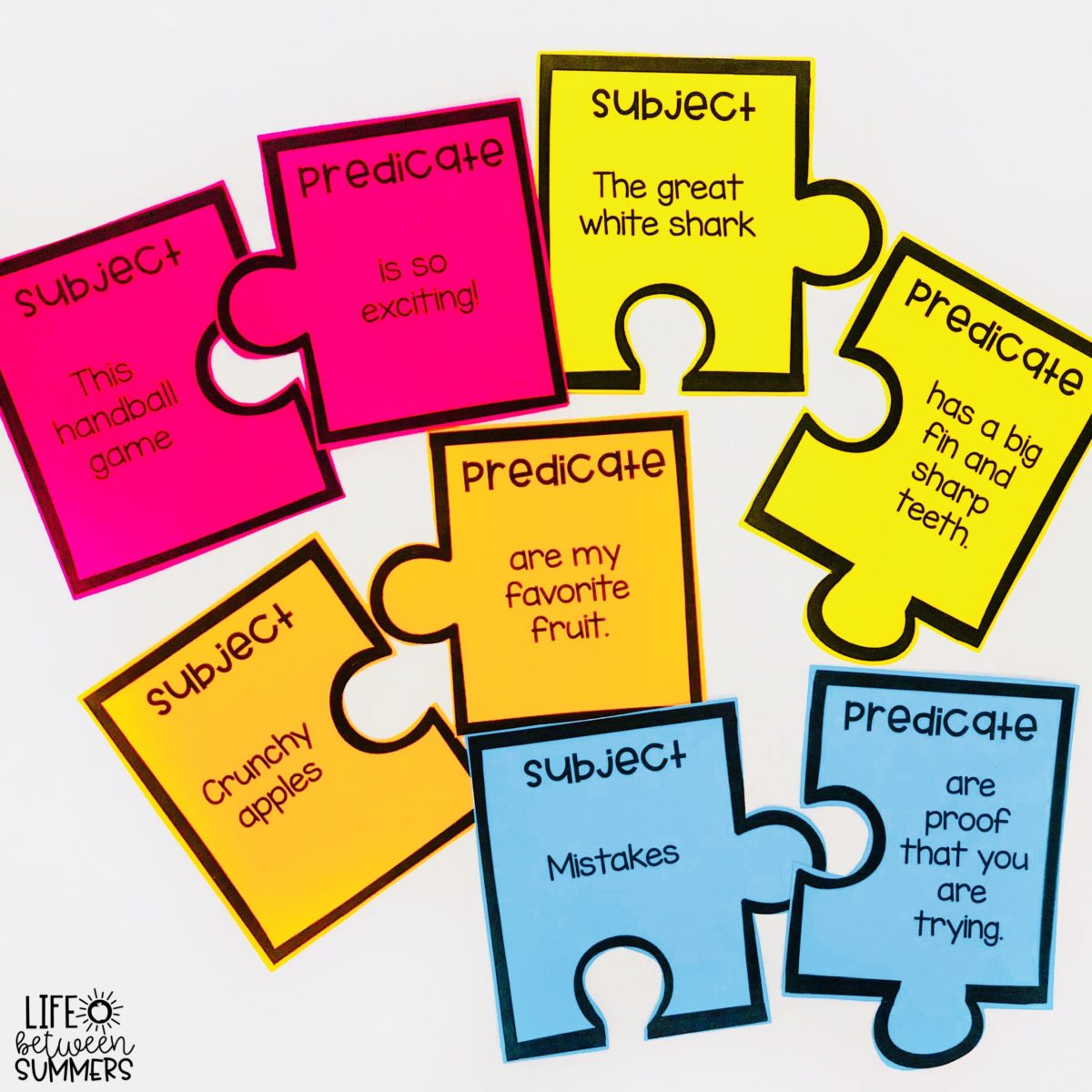
For a writing center, students had to choose a puzzle piece with a subject or predicate on it, and then write their own idea of how to complete the sentence on a blank puzzle piece.
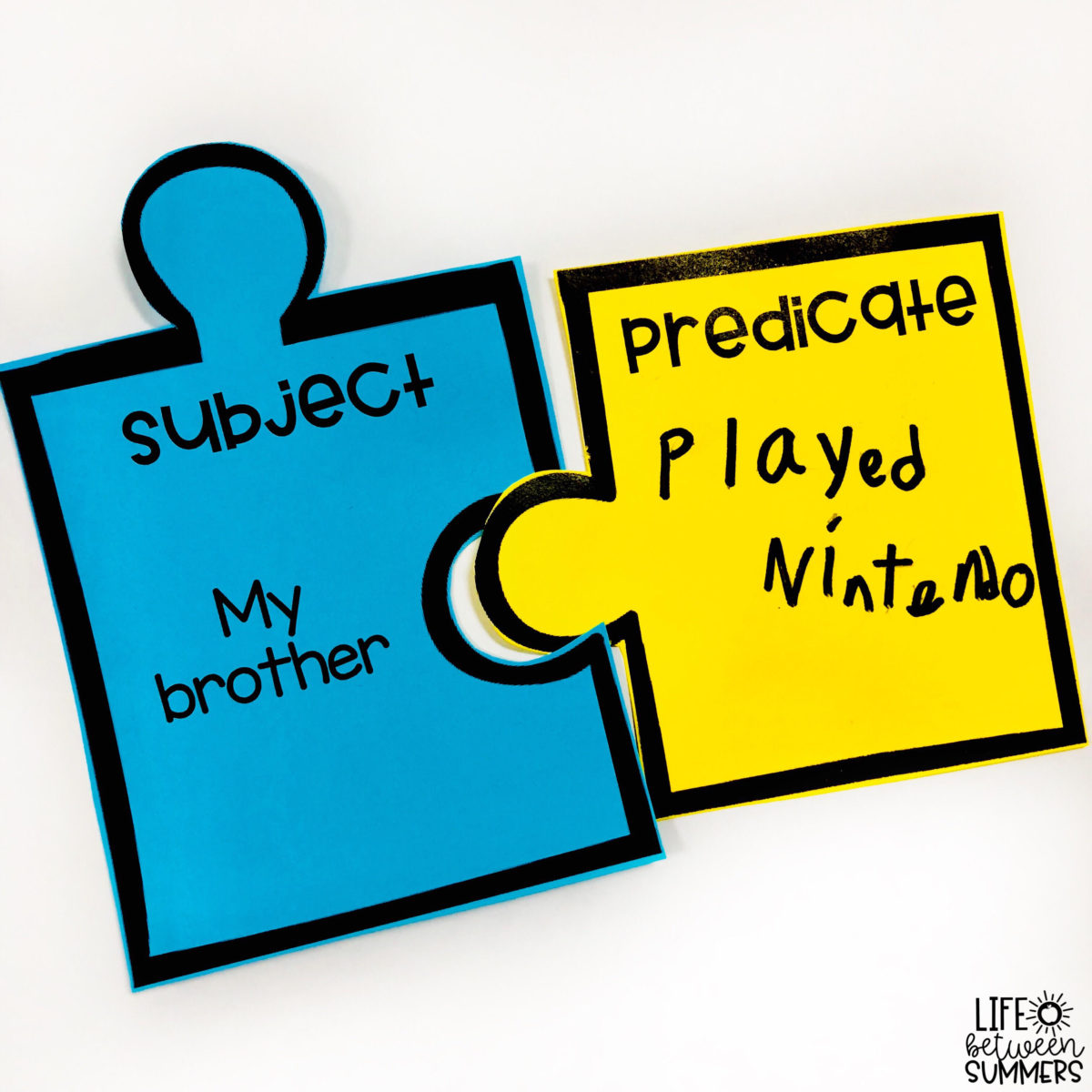
We did a similar activity where each student was given a blank puzzle piece. Half of the class wrote just a subject and the other half wrote just a predicate. They paired up with a partner and wrote the missing part of their partner’s sentence.
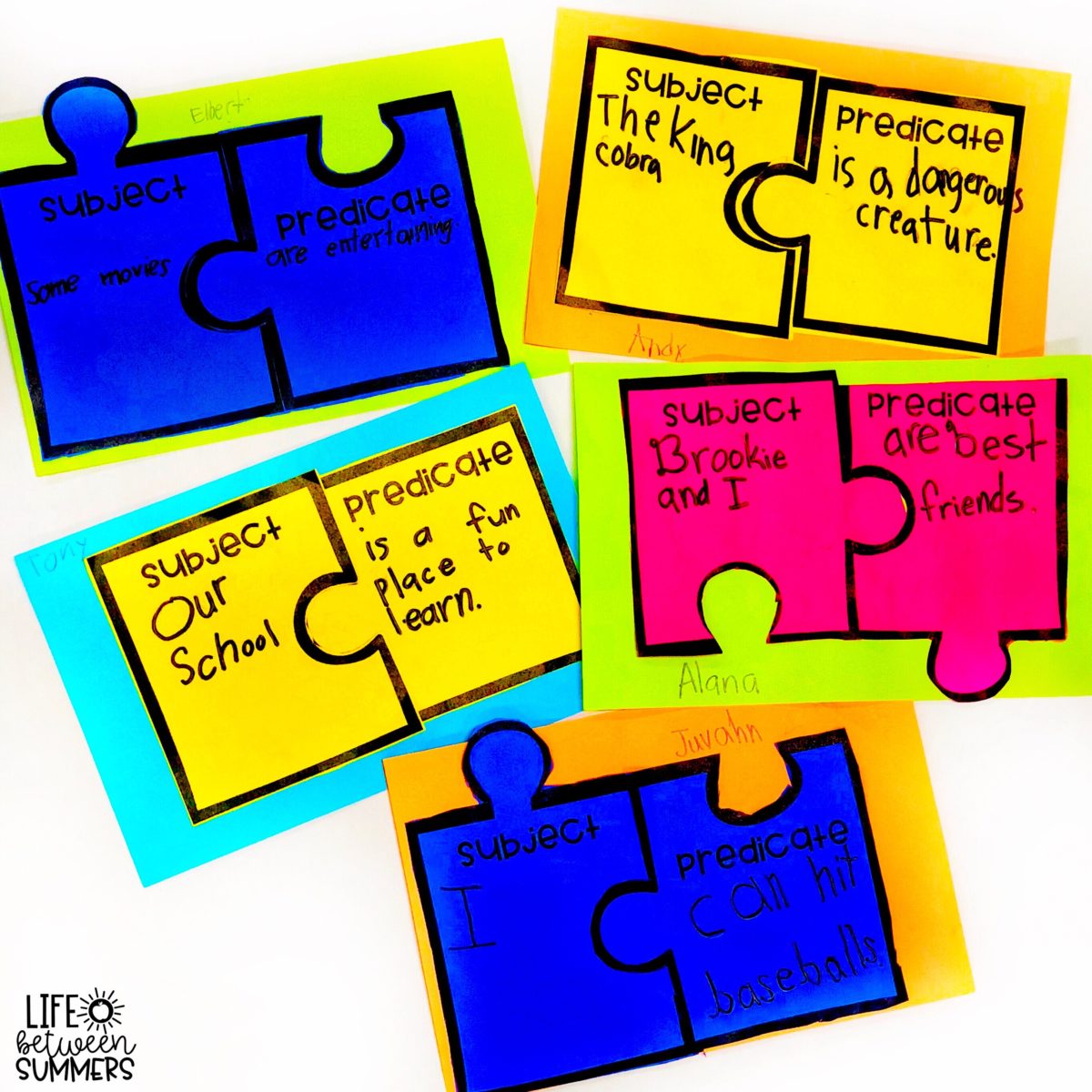
Once they’d had some practice with the different activities and centers, I had students write their own entire complete sentence, which they had to divide into subject & predicate on the puzzle pieces. They cut out their pieces and glued them onto a half sheet of paper.
I went back and hung the puzzle pieces they made around our original chart.
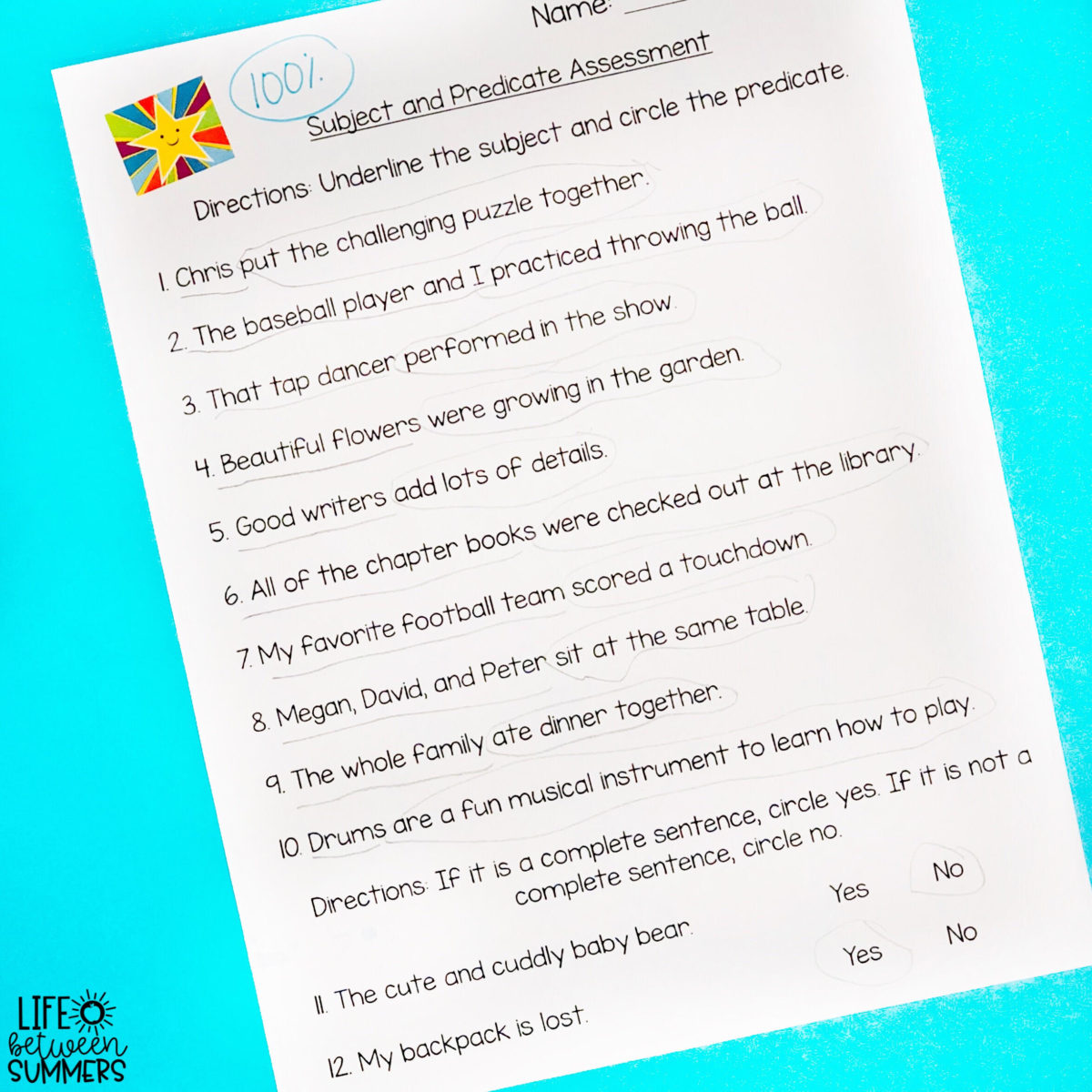
After all of our subject and predicate practice, I wanted to be able to see who “got it” and who still needed more practice, so I gave this quick assessment and the majority of the class rocked it!
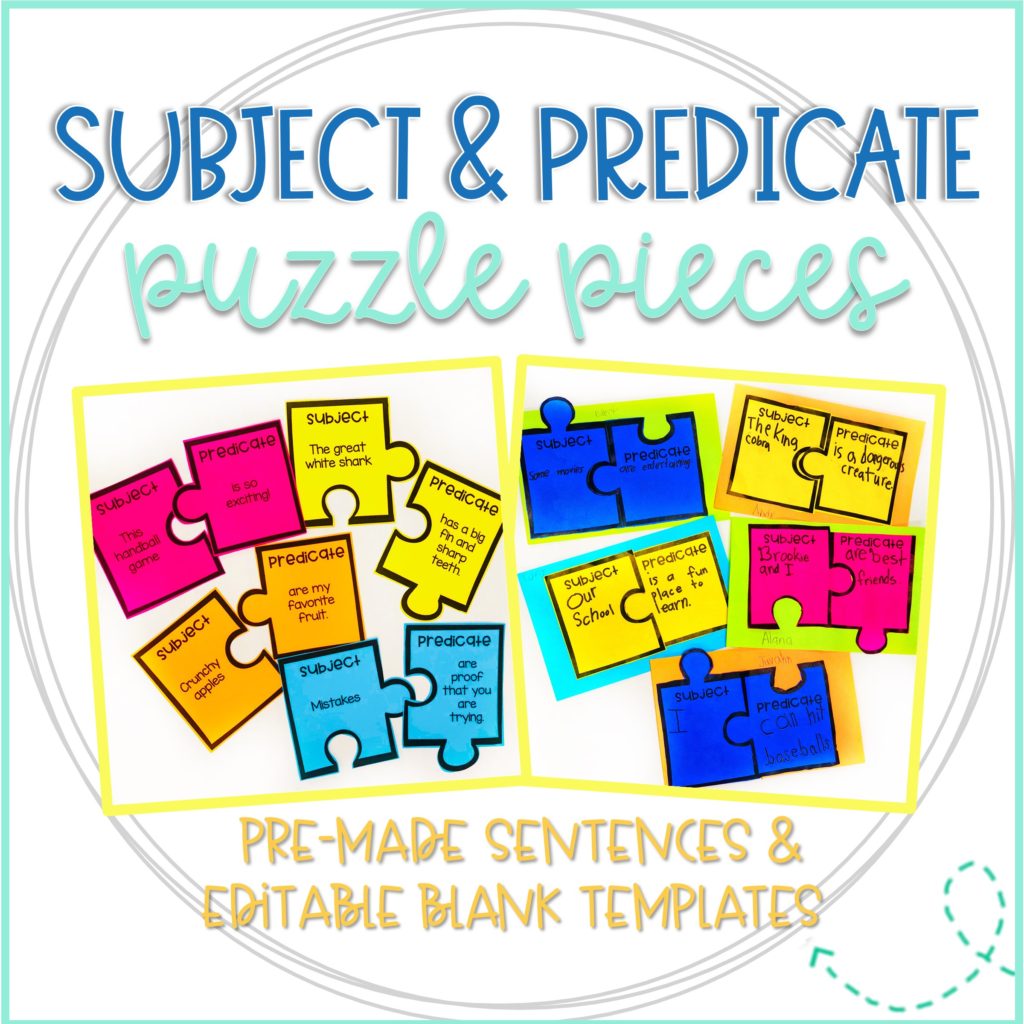
All of the editable puzzle pieces and the subject and predicate assessment are available here in my shop, and also on Teachers Pay Teachers.
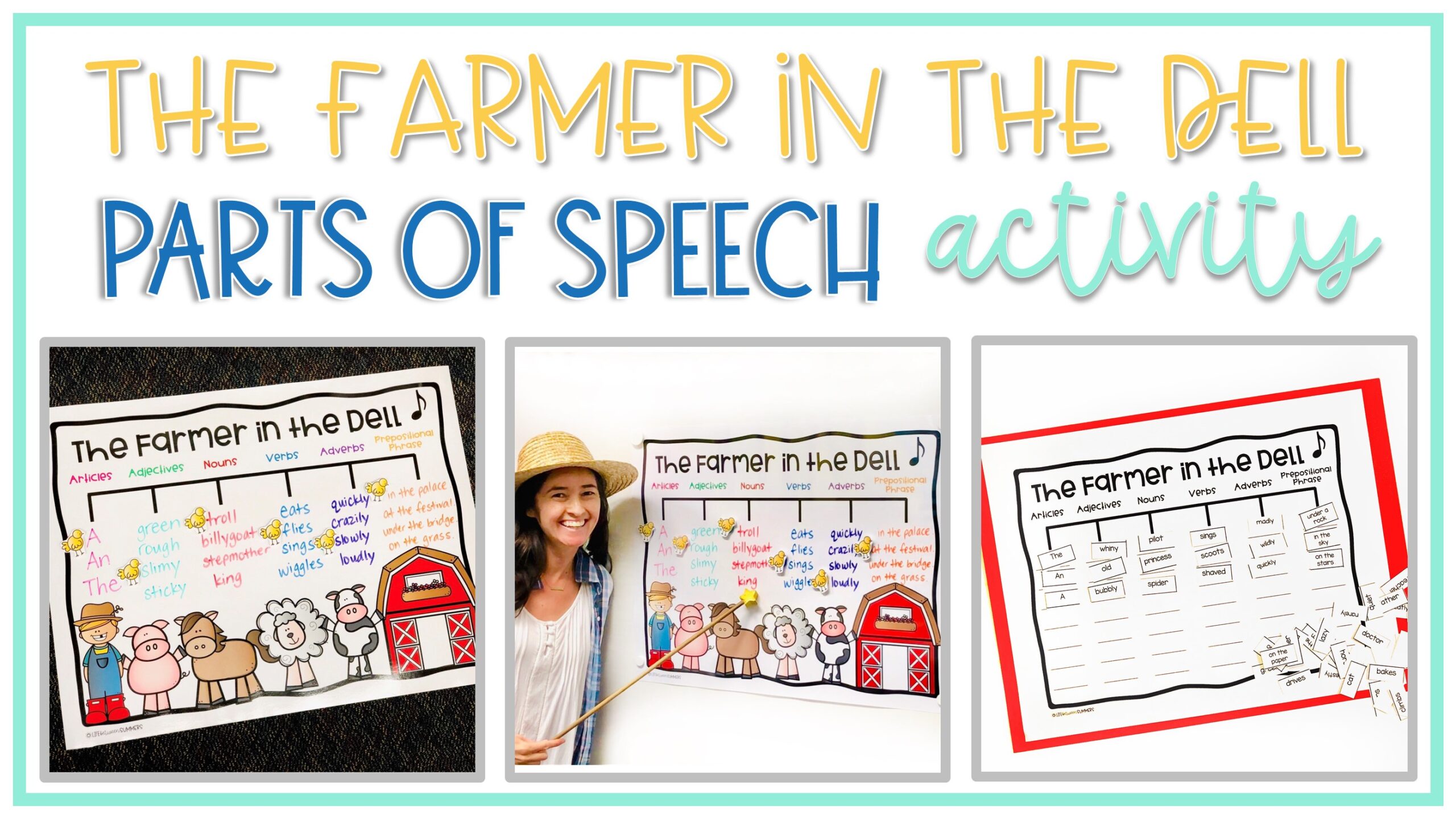
If you’re in need of additional activities to help with complete sentences, you may also want to check out this blog post about a super engaging Farmer in the Dell activity. The kids LOVE it, and it’s not only a huge help with sentence-writing, but also understanding parts of speech.
Taking the time to practice sentence structure is something that serves the kids well in their writing moving forward. Whenever they might write a sentence that doesn’t make sense, you can help them with revising it while using academic language that they understand. You can ask, “Does your sentence have a subject and a predicate?” which is much more constructive than saying something vague like, “The sentence sounds funny.”
What strategies do you use in your class to teach sentence structure? I always love to hear new ideas!