With Easter right around the corner, classroom egg hunts are a great opportunity to make learning fun in all kinds of ways! It is much more active and engaging than sitting and doing a worksheet, and kids often have so much fun hunting for eggs that they hardly realize they are doing schoolwork.
Here are some of my favorite ways to incorporate egg hunts in the classroom!
Color Coded Egg Hunt
Put your students in groups and assign each group a specific color egg to search for. Once they’ve found all of the eggs in their assigned color, have them sit in a circle and open their eggs, which have strips of paper inside. They have to work in a group to guess what all of the words in their eggs have in common. Here’s an example if you wanted them to practice parts of speech. You could put nouns in all of the pink eggs, adjectives for the purple, verbs for the yellow, and adverbs for the blue.
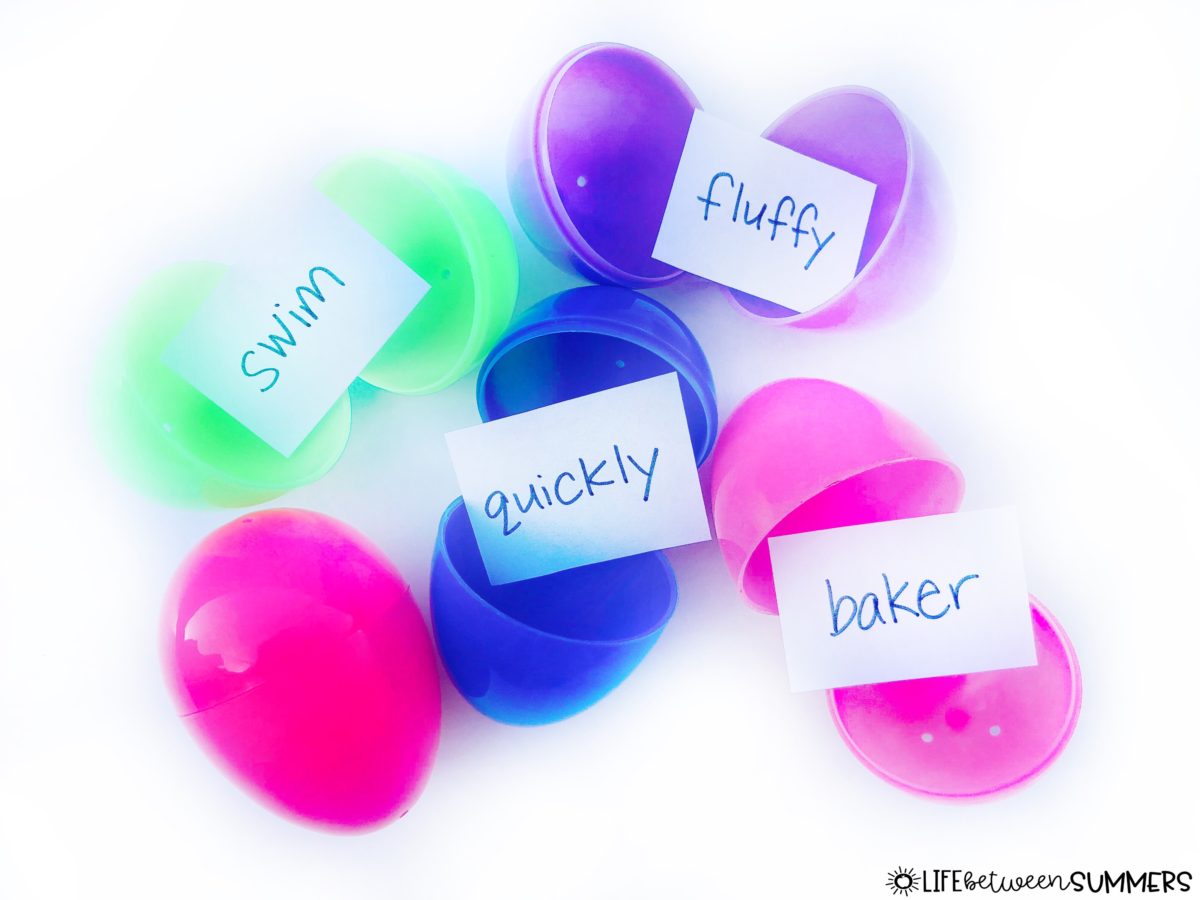
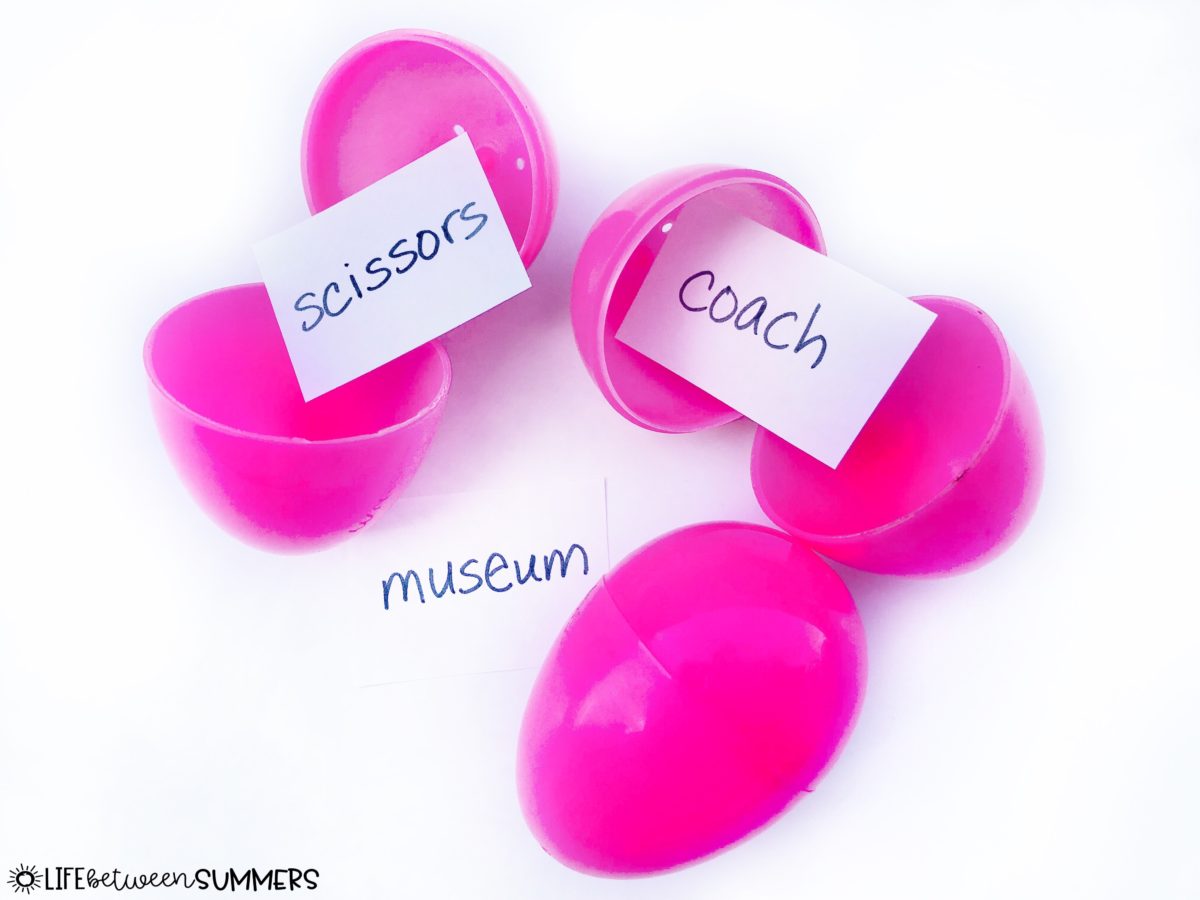
Once the group has guessed what the words have in common, you could have them do an activity with their words, such as sorting by person, place, or thing, or sorting by common and proper nouns.
Then if you’d like, have the kids re-hide the Easter eggs and give each group a new color to find so that they can practice all of the parts of speech.
I love this activity because there are so many possibilities. You could use it for virtually any standard or skill you want to review. It works for geometry, fractions, book characters, historical figures, etc.
Find-a-Partner Egg Hunt
Stuff the eggs with words that come in a matching pair. Think: opposites, contractions, matching vowel sounds, math number sentence and answer, comprehension questions and answer, the list goes on!
Have your students find one egg and then search for the partner with their match!
Time & Money Egg Hunt
This one’s a little more specific to second grade, but if you teach a different grade level hopefully this might inspire you to modify it to one of your math standards.
I’ll start with counting money. For this egg hunt, put different combinations of plastic coins along with a number on a piece of paper in the eggs (or to save time, cards with pictured coins).
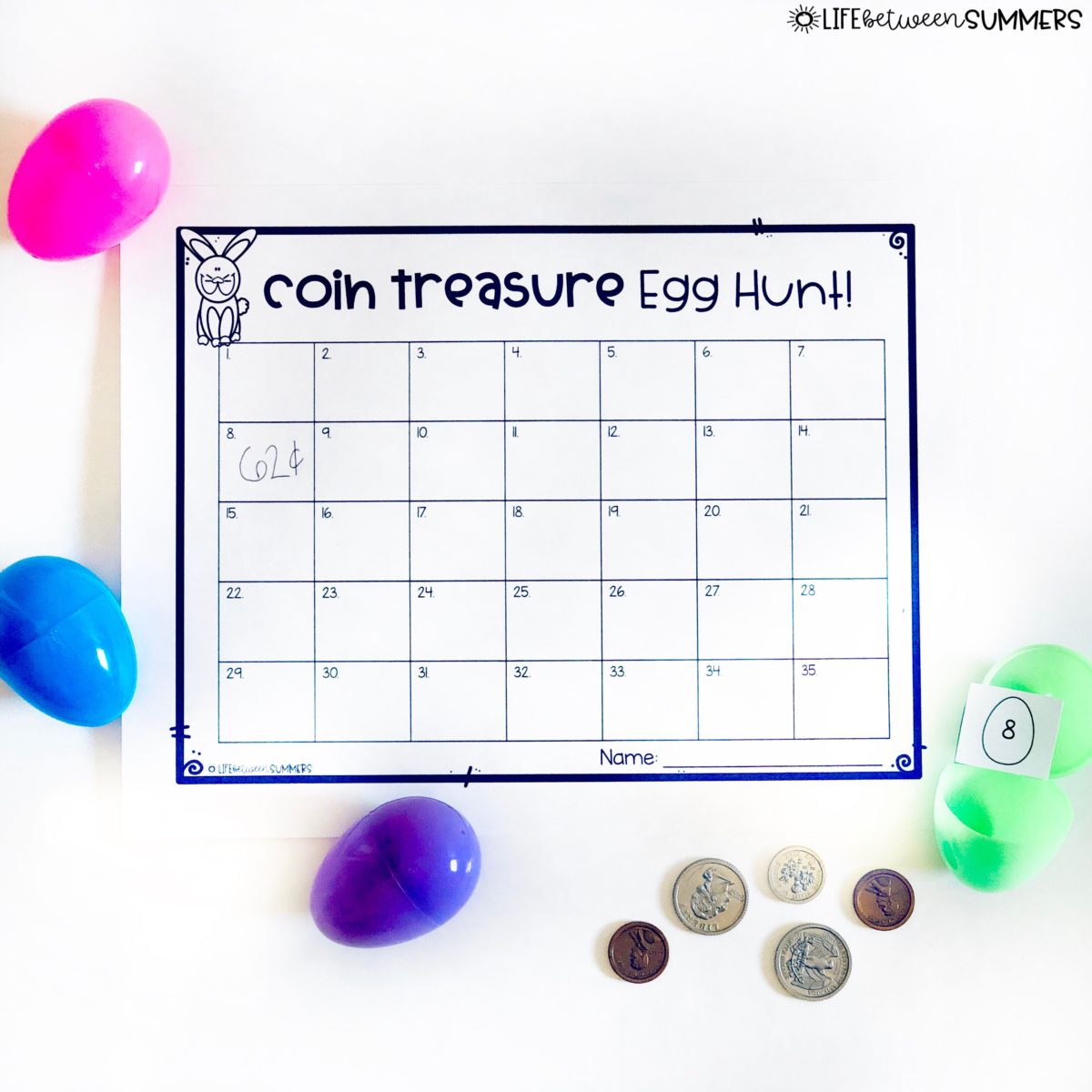

Instead of an Easter basket, students take a recording sheet attached to their clipboard along with them on the egg hunt. Each time a student finds an egg, they open it and count the coins inside. They match the corresponding number inside their egg to their recording sheet and write down the amount of money they counted. Then they close the egg back up, put it back in the same hiding spot, and go search for a new egg.
A Telling Time Egg Hunt works in the same fashion, except students find a paper with a clock inside each Easter egg (or a card with the digital time shown).
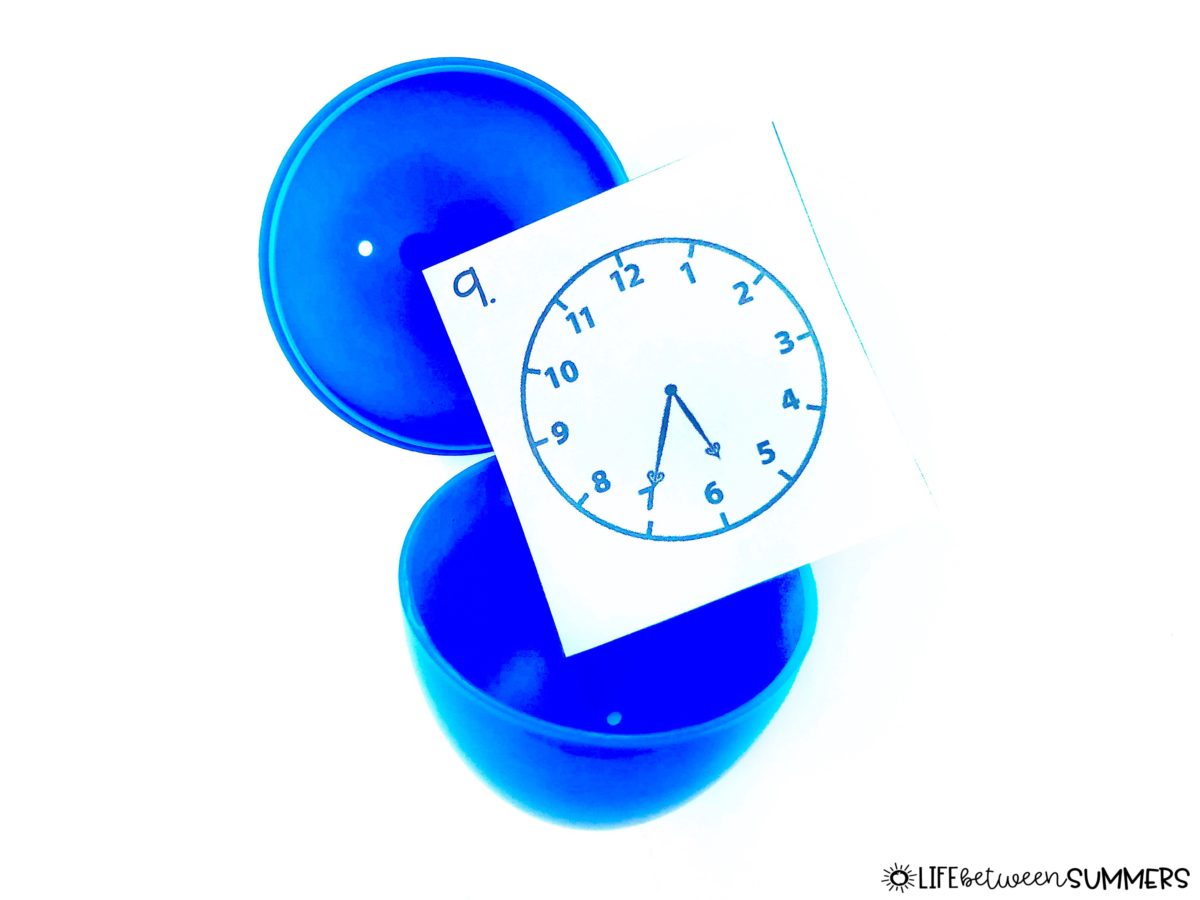
Then they record the digital time on their recording sheet (bonus points if they also tell the time in an alternative way (for example, 3:45 AND quarter to 4). If they found a card with the digital time, then they draw the hands on the analog clock.
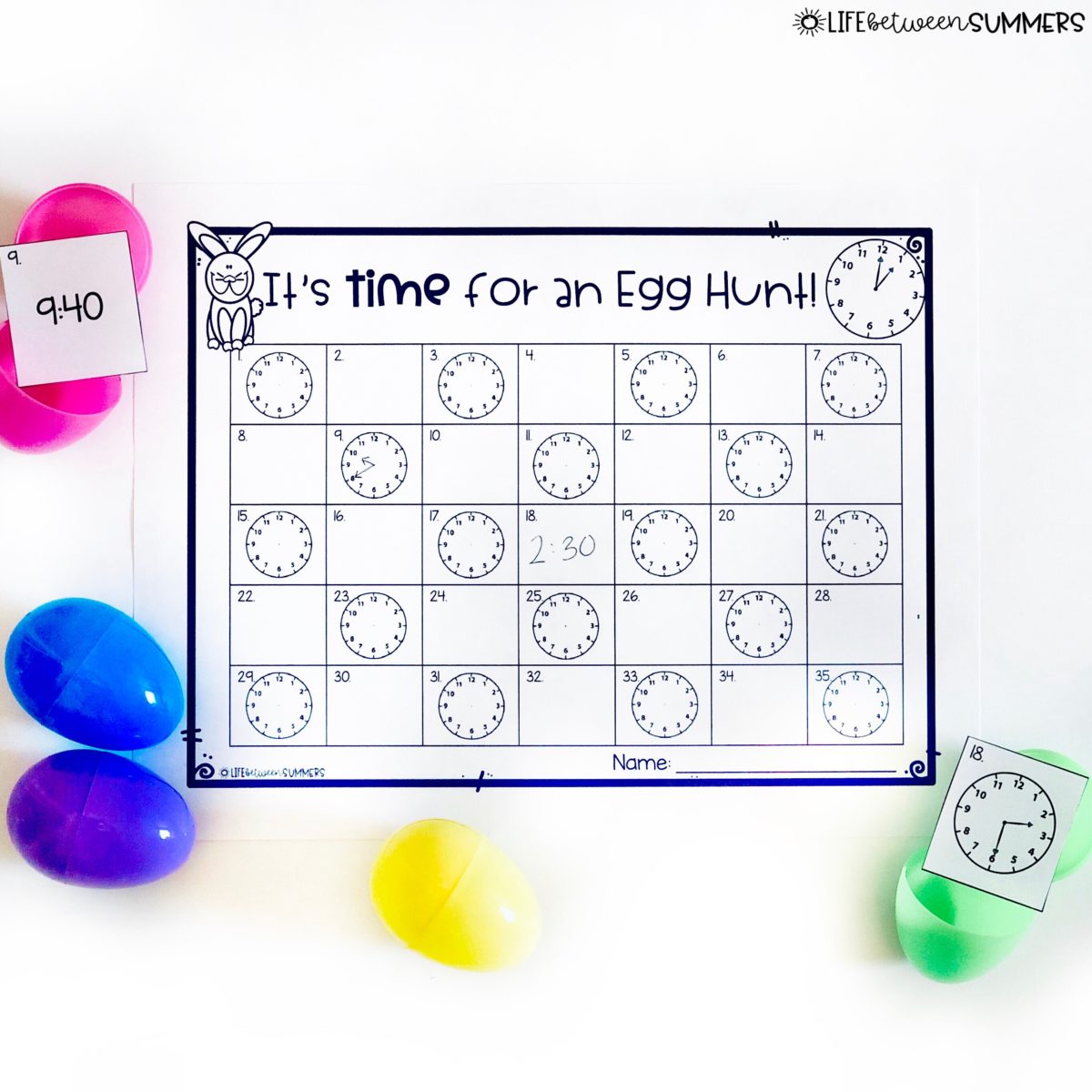
The kids enjoy getting to move about the room, and it’s also great practice and review for this math standard. Win win!
The Great Egg Hunt Challenge: Math and ELA
This works in the same way as the Counting Money and Telling Time activities, except I stuff the eggs with basic math fact problems or Common Core standards-based questions for language arts review.
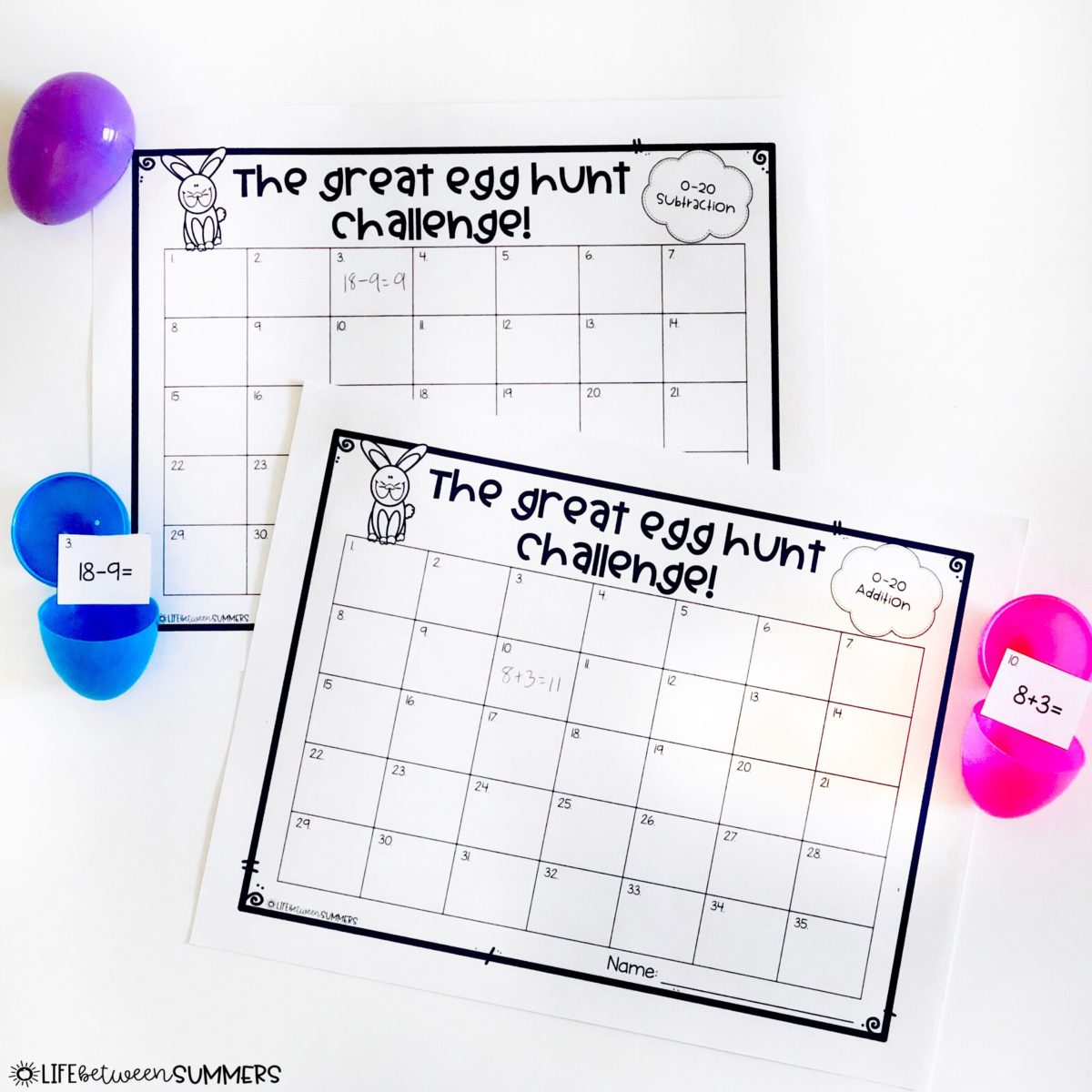
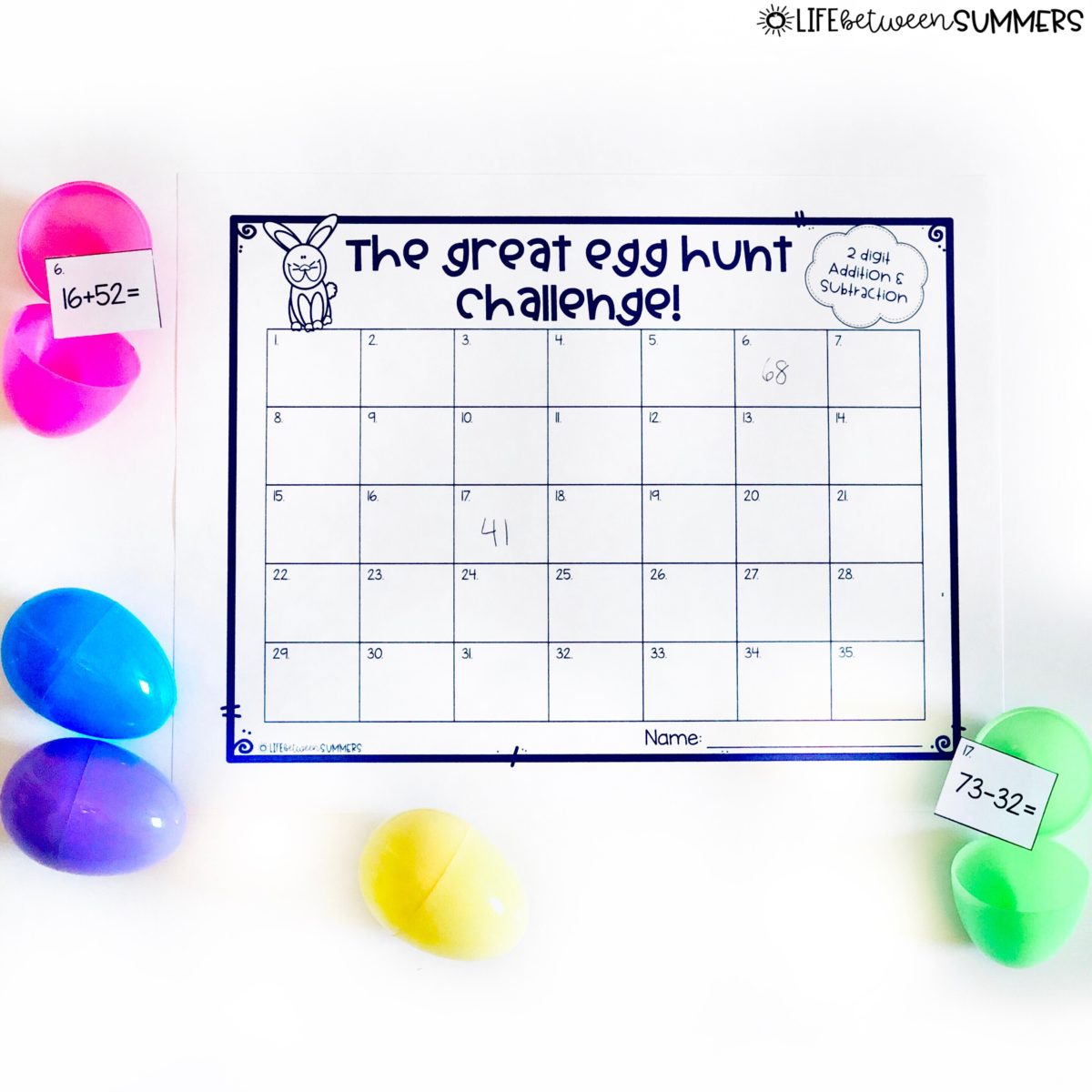
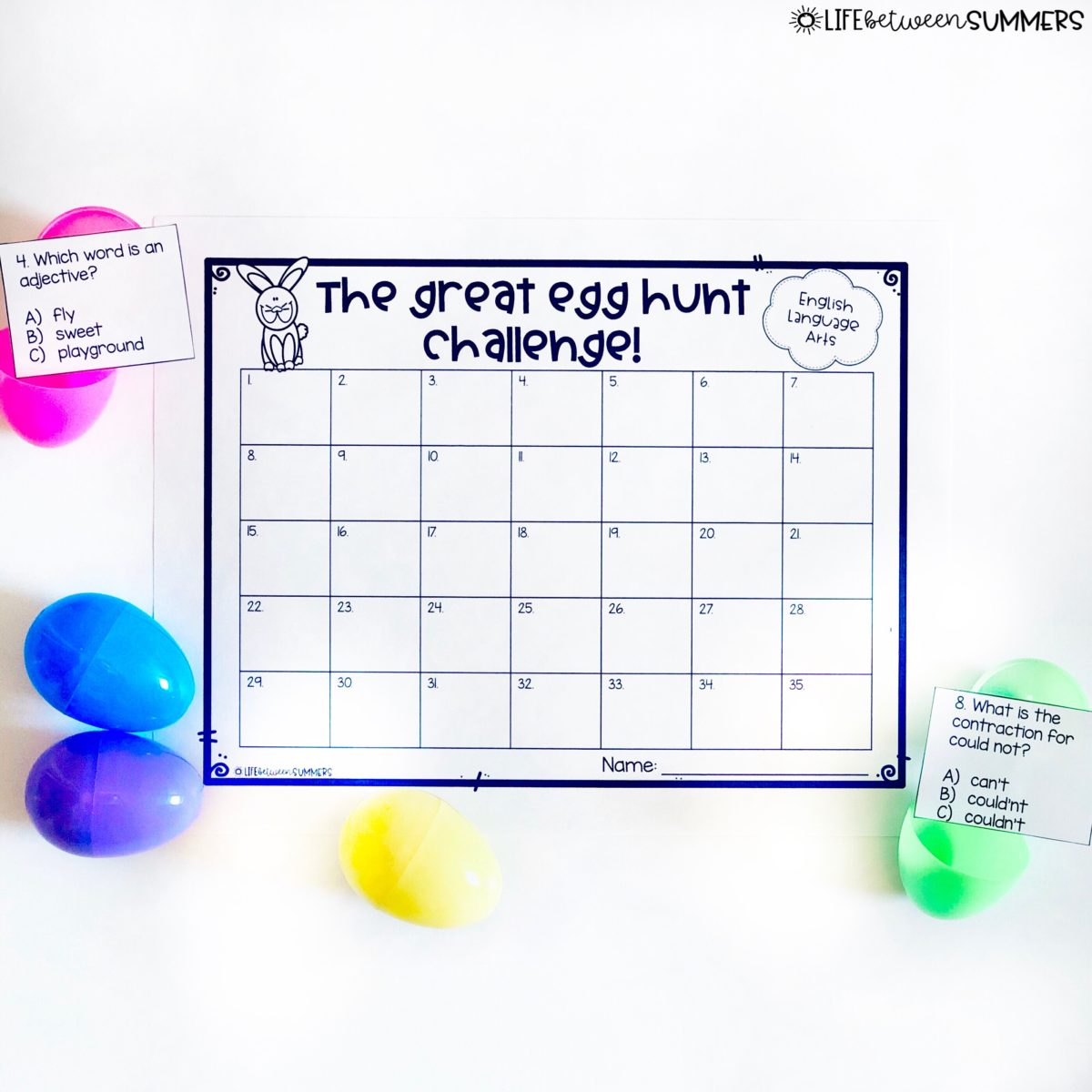
For the Math Egg Hunt, students can either solve mentally, use the backside of their recording sheet as scratch paper, or you can also have accessible math tools on the desks to help with solving (white boards, hundreds charts, place value blocks, etc).
Kid-Created Egg Hunt
Instead of having the teacher decide what goes on each paper inside of the eggs, the KIDS are the ones who think up the ideas. Give them each a strip of paper or two and a type of question to create. The possibilities are endless, but here are just a few ideas for what to have them stuff inside their egg:
- A math problem
- A question about a story we’ve read in class recently
- A word that has a synonym or antonym
- A sentence that needs editing
Once the students are done creating their problem or question for another student to find, allow them to hide their own egg in the classroom. The kids love seeing who finds their egg and answering each other’s creative questions.
Brain Break Egg Hunt
Spring weather can be unpredictable, and other than a bride on her wedding day, rainy days don’t effect anyone quite so much as teachers. We all know what it’s like to have a room full of kids who have been cooped up for indoor recess all day. A physically active egg hunt is a great Brain Break activity to get kids up and moving. If you’re lucky enough to have some nice spring weather, this egg hunt is also ideal for taking place out on the field for PE.
Fill the eggs with physical actions for the kids to do:

When they finish the action, they replace the egg back in its same spot and go find a new one. It’s no surprise that the kids LOVE this egg hunt, and it’s great exercise for them!
And if you want to up the ante on any of the activities described above, here are some guaranteed crowd pleasers that can make your egg hunt EGG-stra awesome (I strongly considered leaving out that pun, but I’m shameless).
Glow in the Dark Egg Hunt
Turn off the lights in your classroom and have your students search for glowing eggs!
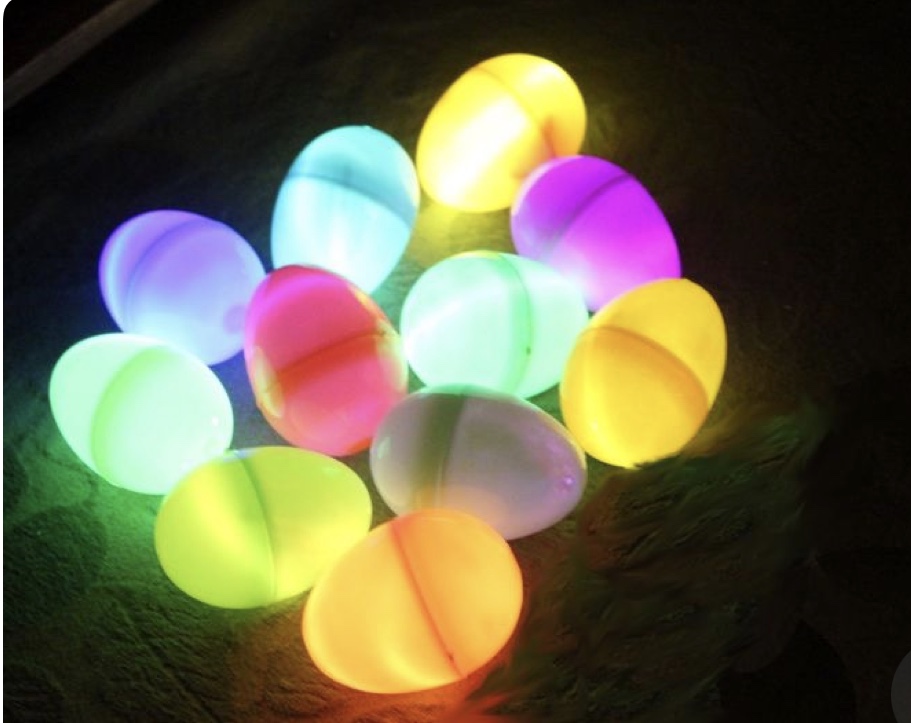
This is made easy by adding small glow bracelets with the paper inside the eggs. Or even easier, there are mini glow sticks that are specifically made for stuffing Easter eggs. You can grab a pack of 24 with eggs included on Amazon or if you’re doing a larger hunt you can also buy them in a pack of 100. Right now (at the time my blog post was published) the pack of 100 is on sale!
Bunny Hop
Add in some laughs and a little exercise by having your students HOP as they search for their Easter eggs. When I’ve done this with second grade graders, they’d get a kick out of hopping like bunnies around the room (and get some good exercise too).
Make it Musical
Play music as students move about the room. When the music stops, they can then stop to find an egg.
Give a Treat
Kids obviously love to find eggs with treats inside. For any of the language arts or math related egg hunts, place a sticker or other treat inside the egg along with the task card. Students can keep the treat inside the first egg they find, or select one treat to keep as they move through the activity.
The Golden Egg
Label one of the more challenging questions/problems inside one of the eggs as the “Golden Egg.” Any students who answer it correctly on their recording sheets win a prize.
The activities I’ve shared are completely easy to prep and create on your own, but if you are limited on time (I should probably go ahead and say since you are limited on time…what teacher isn’t?) I have ready-made recording sheets and questions made for each of these Egg Hunts linked below. You can find them in the shop on my website, and also in my TPT store:
Basic Addition and Subtraction Facts 0-20
2 Digit Addition and Subtraction
3 Digit Addition and Subtraction
2nd Grade Common Core Language Arts
If you want all egg hunts listed above for the weeks leading up to Easter, you can save when you grab them in a bundle:
The Great Easter Egg Hunt Challenge: Bundle
If you don’t see the skills/standards you would like to cover but still want an easy template and the ready made answer sheet, I also have an editable Create Your Own Egg Hunt.
Hopefully these egg hunts will serve as one way to help make learning fun for your class during these weeks leading up to Easter. Love and blessings to you, your family, and your students!