When I was a kid, if someone had given me a pencil, a fresh notebook, and a writing prompt, then I would be in heaven. Independent writing was one of my favorite parts of school. I would single-mindedly focus on the task because writing was a joy for me!
But that’s not typically the majority of students, at least from my own teaching experience. Chances are, most classes will have some reluctant writers (who often have trouble staying on task during independent writing).
You might know them well. Your kiddos who…
- disrupt others by talking, making noises, etc.
- can’t seem to stay in one spot, and find frequent excuses to leave their seat
- are always playing with their pencil or any other item they can get their hands on
- aren’t disruptive, but just sit there and barely get anything on the paper
Students who have more trouble focusing can absolutely be successful in writing- they just need some extra support!
Here are 7 ways to help students be on task and do their best work during independent writing time.
PLAY BALL!
This one year during back to school time, I could see from the get go that I had a lot of less-than-enthusiastic writers in my group. When it came to writing, I noticed that several of my kids were not very motivated to get to work (and get words down on the page).
As we were doing get to know you activities at the beginning of the year, I also noticed that many of those students played sports, particularly baseball.
That’s when it hit me: Baseball is a lot like the writing process!

The stages of writing naturally align with running the bases:
- Batter Up: Brainstorm ideas and create an outline (the prewriting stage)
- First Base: Create a rough draft
- Second Base: Edit and revise the rough draft
- Third Base: Meet with the teacher for a writing conference, or one-on-one “coaching”
- Home Run: Celebrate by publishing a final draft!
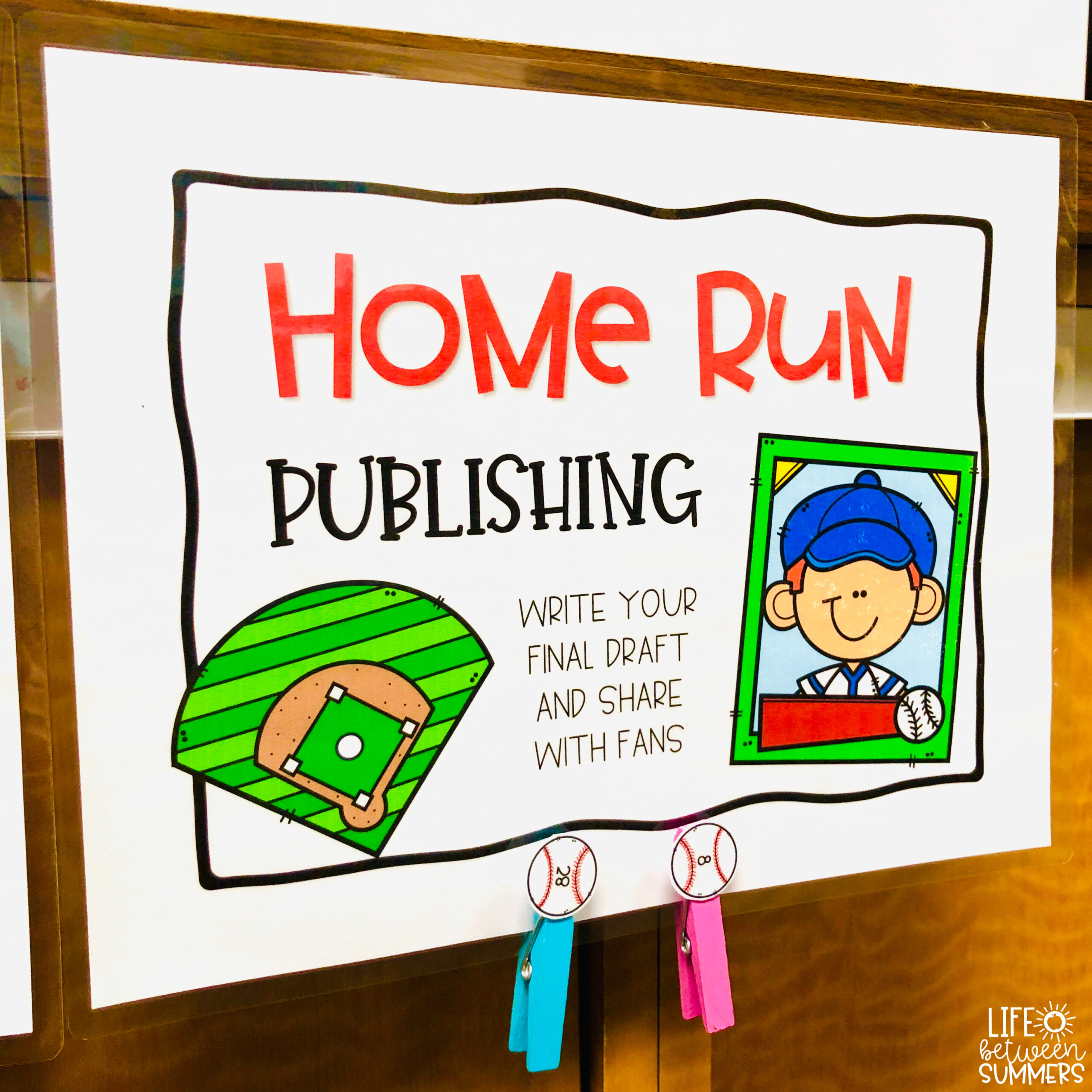
When using these bases to help introduce the writing process, you can really ramp up the excitement by getting into character and explaining the process like a real baseball coach. Bonus points if you dress the part!
Students “run the bases” by moving a baseball clothespin from one to another as they complete each step. It gives them a sense of accomplishment as they progress through the writing process (and the reward of a quick brain break to get up out of their seat to move their pin).
If you’d like more details about how to use this as a way to motivate reluctant writers, you can read more about that HERE.

KEEPING AN APPROPRIATE VOLUME DURING INDEPENDENT WRITING
If you’ve got kids who have difficulty with working quietly during independent writing time, here is an effective strategy you could try: On-Task Manager.

All you need is a timer. A sand timer is less disruptive, but any timer will do. As an added bonus, you could also display a little sign like this one pictured above.
Here’s how it works:
Once independent writing time begins, be on the lookout for the student who is meeting behavior expectations (begins working right away, focused on their work, etc). Announce that student as the first On-Task Manager. Some alternative names for this are The Quiet Monitor, or even the Quiet Queen/King.
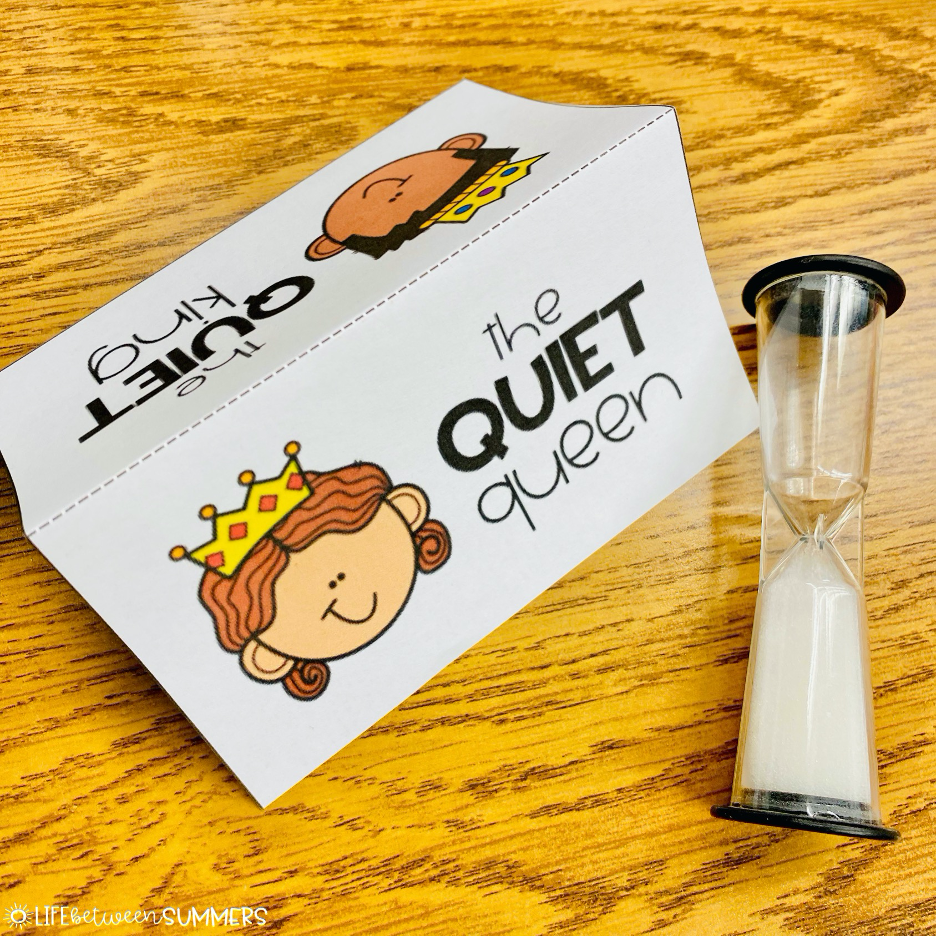
If you decide on the Queen/King name, you could also opt to place a paper or plastic crown next to the sand timer.
The designated student flips the timer (and if you have a crown, they can wear the crown on their head if they want to). While the timer is running, their job is to “supervise” the room to determine who is doing the best job of staying on task.
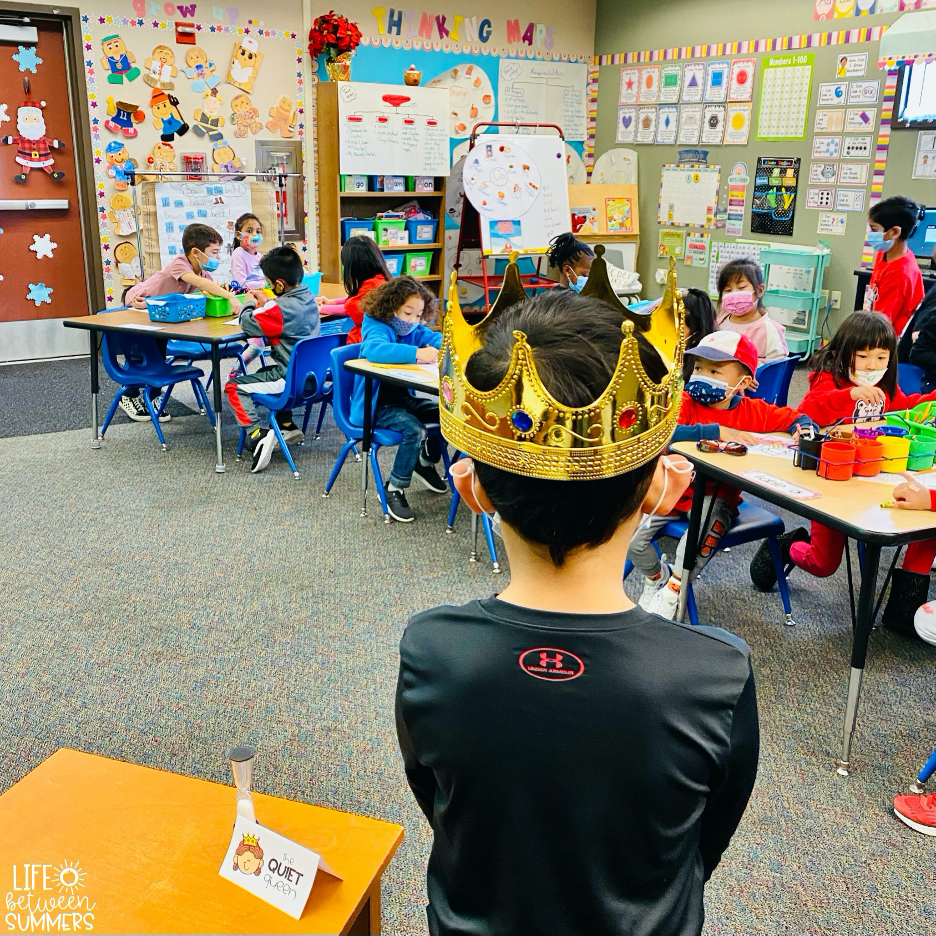
When the timer is up, the On-Task Manager goes and taps the student on the shoulder who they thought was doing a good job of concentrating on their writing. That student then becomes the new monitor, and the cycle continues.
While it does take away a few minutes of work time for each student who has a turn to be the manager, I’ve found from experience that the trade-off is worth it.
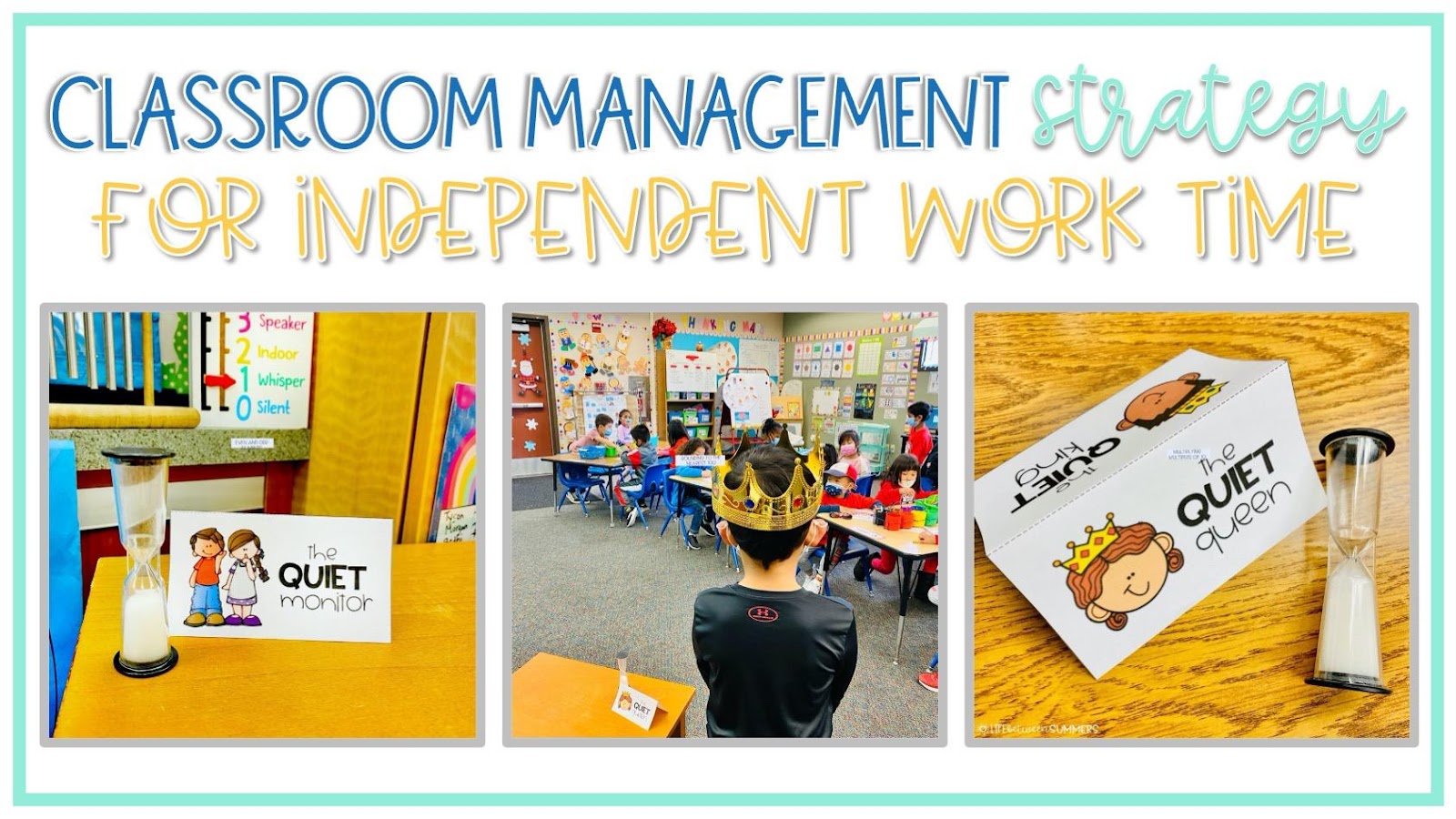
Want a free copy of the little table signs (and more tips/suggestions on how to implement this strategy in your class? Go to this blog post.
For another way to keep the volume levels down during independent writing, all you need is a music box.

Here’s the one I’ve used (the kids like that it’s personalized with their photo).
The way it works is very simple.
Let students know that you’ll be winding the music box all the way up every Monday. When it’s time for the kids to work independently and they’re being too loud for others to concentrate, open the music box and let it play. Close it back up once it has quieted down to an appropriate noise level. Do this throughout the week as needed.
If the kids still have music left at the end of the week, they earn a letter that spells out a mystery prize. You can keep the blank letter spaces displayed on the board (think “Wheel of Fortune”).
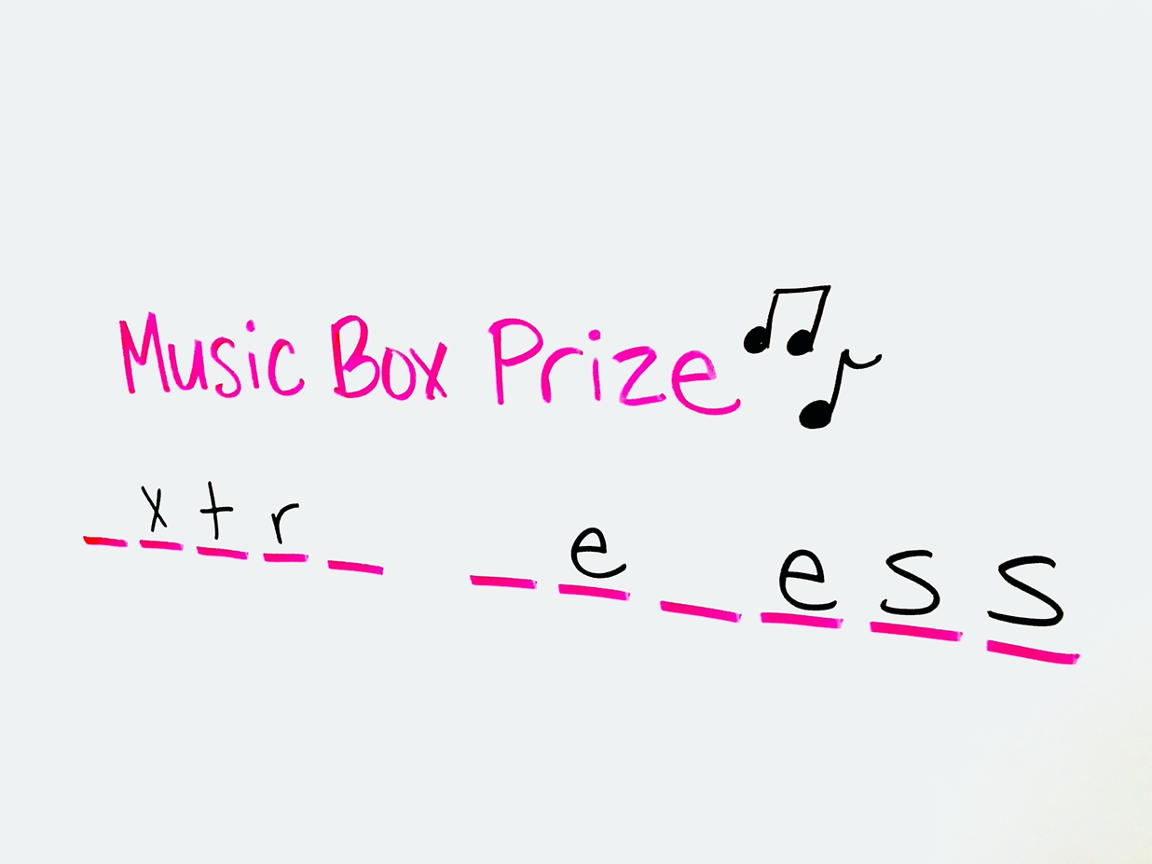
The kids really get into trying to guess what the prize is each time they get a new letter. Once they’ve filled in all of the letters, they earn the prize.
HOW TO ENCOURAGE STUDENTS TO STAY IN THEIR SPOT
Do you have any students who are prone to wander when they should be working on their writing? There are several strategies that can encourage them to stay put.
Consider allowing kids to stand at their desk while they’re working, as long as they stay at their desk (or other workspace).
Flexible seating is also helpful, particularly when combined with student choice of where to sit. There are endless options- bean bag chairs, exercise balls, scoop chairs, or even just a chosen spot on the floor with a clipboard in their lap. Students are often more motivated to do their work if it means getting the privilege to sit somewhere special.
I’m also a fan of wobble seats like these ones. They give students the ability to wiggle and move without making additional noise.
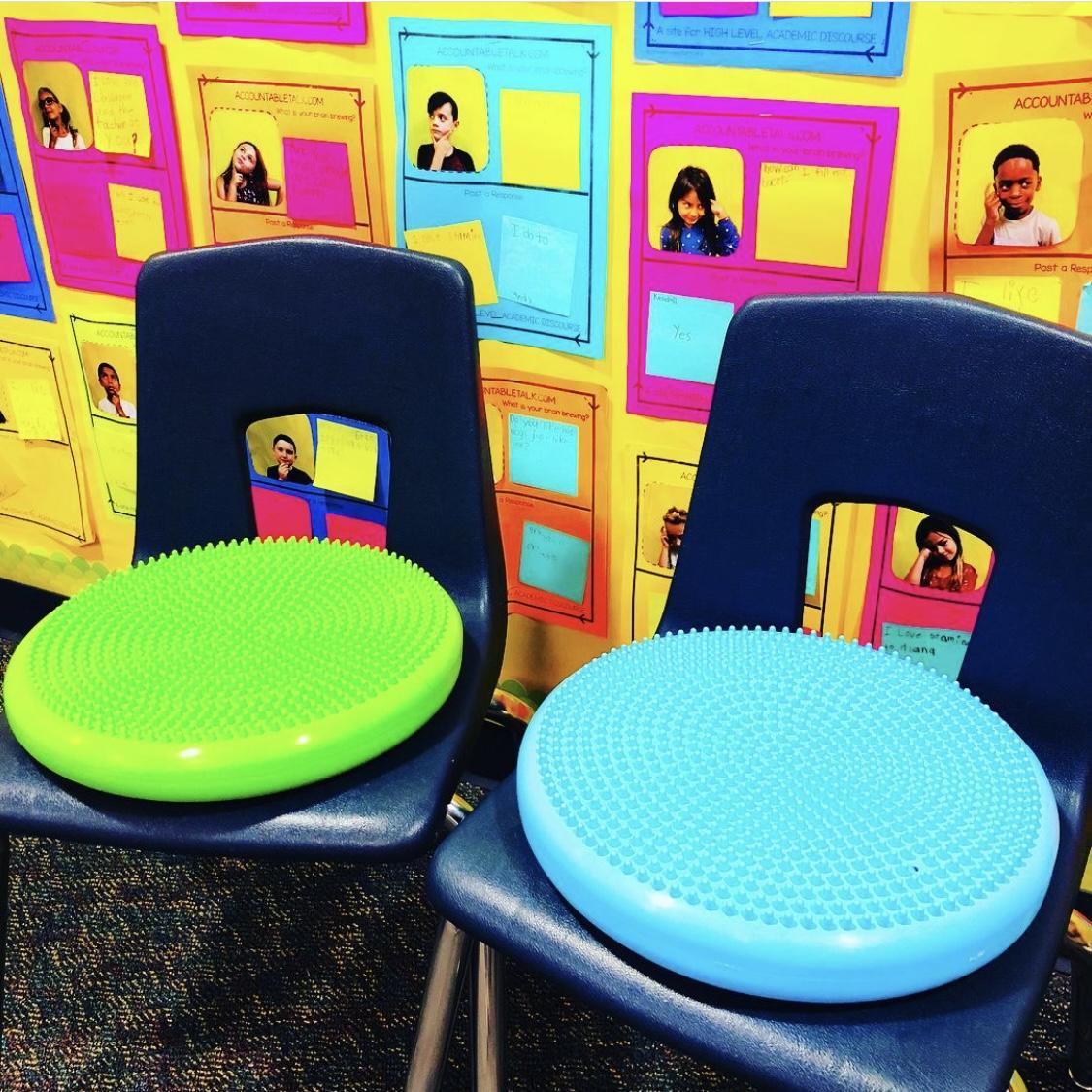
It’s simply an inflated cushion that can be placed on top of any chair, but it gives students just enough cushion to move without having to leave their seat!

Seats like these can also be utilized as a positive behavior incentive. Tell students you will be keeping an eye on who is doing a good job of staying in their spot and working hard during independent writing time. The reward is that they get to sit on the cushion the next day during the entire writing block!
HOW TO ENCOURAGE NEAT HANDWRITING
Many reluctant writers will zoom through independent writing time because they just want it to be over quickly. That means, you’re also more likely to get drafts that are barely legible.
Having some sort of motivating incentive, such as a Penmanship Award, is an easy way to encourage students to use their neatest handwriting on their final drafts.
I created one below using my Cricut, but the award can be any cup/mug/container of special pens or markers that they get to keep at their desk all week.

You can announce the winner at the end of the week, and students are excited to hear who it is! And what’s equally exciting is the neater penmanship that you’ll be likely to see throughout the week.
HOW TO ENCOURAGE EXCELLENCE IN WRITING
One of my favorite ways to encourage excellent effort or achievement in writing is to have a Writer of the Week.

Just like the Penmanship Prize, you can announce the Writer of the Week at the end of the week and explain why the student earned it.
- “Claire added great adjectives and details in her sentences this week.”
- “Victor worked really hard at editing his opinion paragraph.”
This award is for ANY student, not just the gifted writers. It motivates students to give their best effort even if they struggle with independent writing.
The Writer of the Weeks gets to pick a special pencil to keep. Michaels sells ones topped with fun erasers (that’s where I got the ones you see pictured above).
HOW TO GET STUDENTS ENGAGED IN WRITING
This may seem obvious, but another tip for staying on task during independent writing is to give students a variety of engaging writing topics (or allow them to choose) so that they’ll be more motivated to write.
Journal-style writing prompts that give students permission to share their thoughts and feelings are often effective in getting students motivated to write. The easiest prompt follows this format:
What is your favorite _____________ ? Why?
- What is your favorite book/movie? Why?
- What is your favorite season? Why?
- What is your favorite meal? Why?
- What is your favorite thing to do on a rainy day? Why?
Another type is “Would you rather…” or “This or That” types of prompts. For example: Would you rather go on vacation where there is a beach, or where there is snow?
Just like with the “favorite” type of prompts, make sure to ask, “Why?” at the end to encourage them to elaborate.
HOW TO MAKE THE MOST OF INDEPENDENT WRITING
Not only have I wanted students to be motivated to do their best writing, but there is also the issue of keeping a pulse on the writing they are actually producing (without having to constantly pour over 30 notebooks).
Author’s Chair is by far the best solution for both!
When the kids have completed a piece of writing that they can feel proud of, they have the option to sign up to be a featured author. They sign up for a slot on an Author’s Chair sign up sheet to make it official:

Choose a day each week that works best for you, or if you ever randomly happen to need a time filler for a few minutes here and there, just go to the list and call on students to share their work with the class.
If you’d like, you could also have a certain chair or stool for the featured author to sit on. And you can make it extra special by letting them speak into a microphone as they read (they love that)!
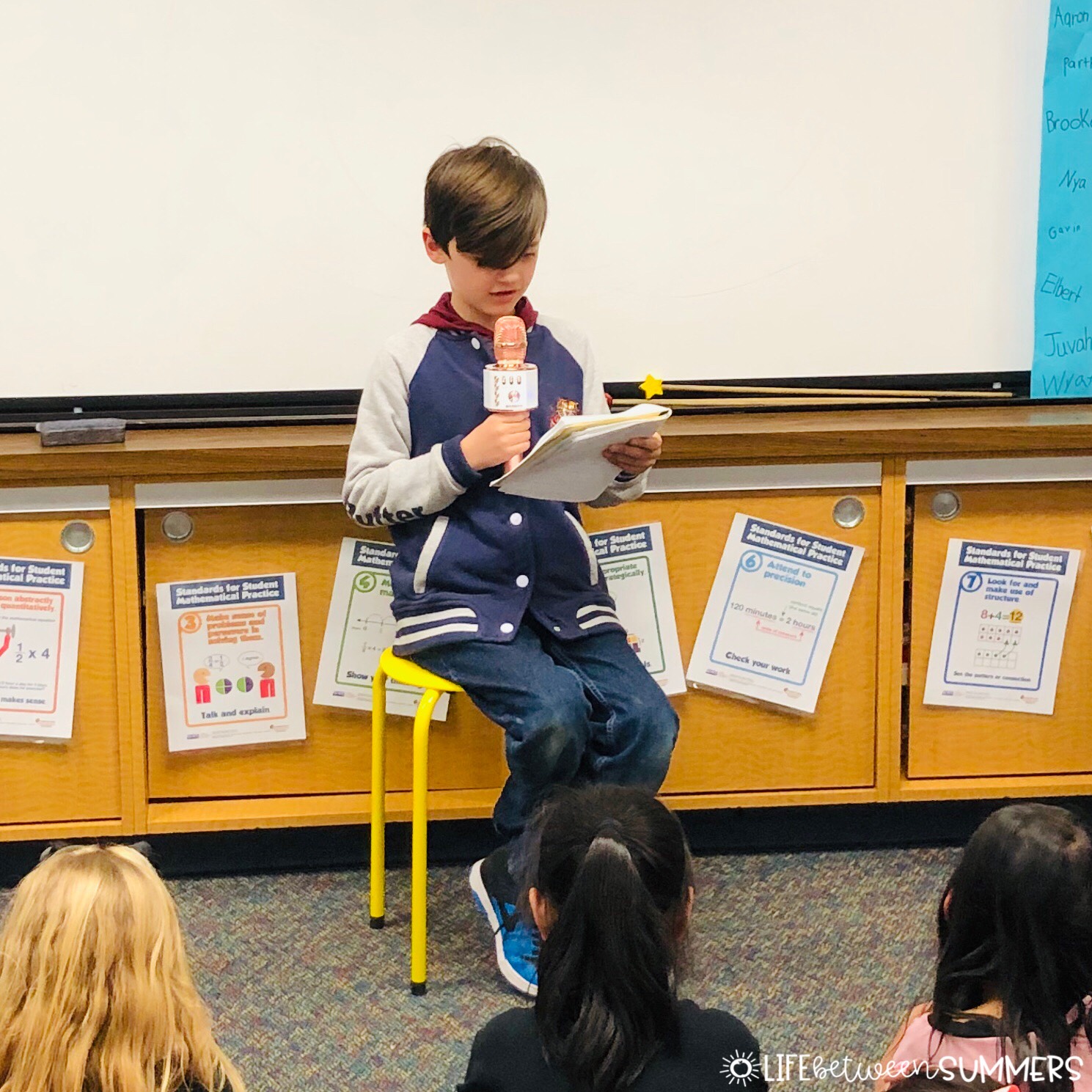
After a student finishes reading aloud their work to the class, open it up to the class for a couple of questions or comments. It’s validating for the author, and it also encourages active listening from the audience.

During this Q&A portion, I noticed a lot of the same types of responses over and over. So I created these Author’s Response cards.
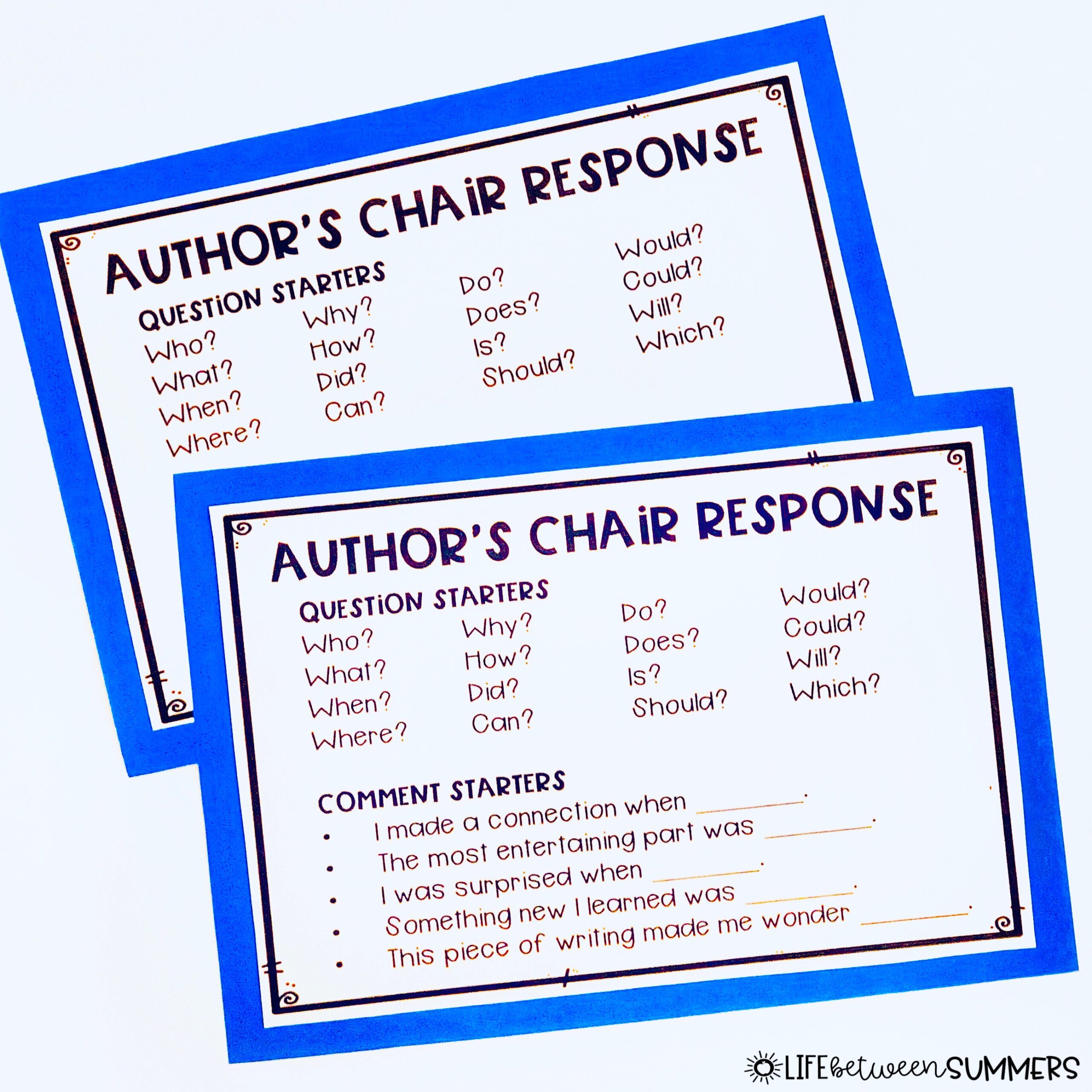
It helps students form more thoughtful follow-up questions or comments, and leads to more meaningful feedback for the author.
You can read more about how to use The Author’s Chair in your classroom here on my blog: Author’s Chair Ideas.
Motivating reluctant writers to give it their best can be a challenge. But by trying out different strategies and seeing what works best with your kids, it’s amazing what they can accomplish with a pencil and paper!