Any time of the school year is a good time to celebrate the courageous actions of heroic women, like Rosa Parks. And February gives an even extra opportunity for Rosa Parks activities. It happens to be the month of her birthday (February 4th, to be exact). And of course, February is Black History Month, which is also followed by Women’s History Month in March.
Rosa Parks’s admirable story remains relevant for students today. Her refusal to give up her bus seat to a white man was an act of bravery in segregated Montgomery, Alabama in 1955. By her example, students can be inspired to stand up for what they believe in as well.
Here are a few Rosa Parks activities for the classroom to honor her legacy with students.
ROSA PARKS READ ALOUD
As with most topics, a read aloud can be a valuable springboard to spark a class discussion. If you’re in need of any read aloud recommendations on Rosa Parks, 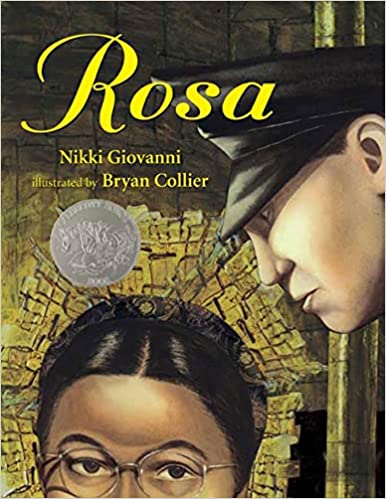
It’s also a Caldecott Honor book, so the illustrations are striking along with the text.
ROSA PARKS CLOSE READING
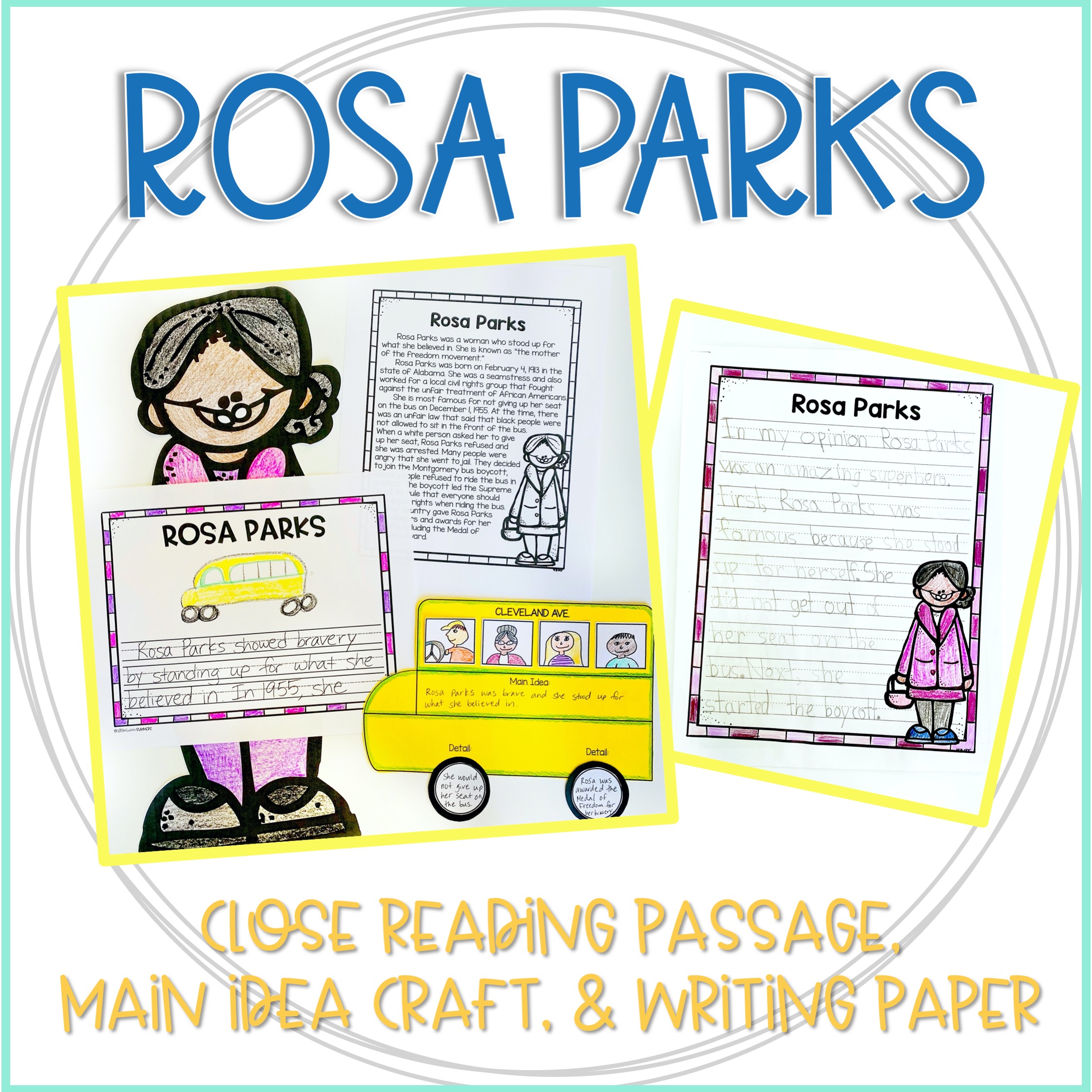
In addition to using text read aloud, you could also incorporate a Close Reading passage for students to analyze.
Close Reading is a foundational literacy skill because it helps younger readers analyze a short text. Rather than simply skimming over words, students engage with the text by annotating and underlining, etc. These skills are vital in helping them become independent readers who can not only read, but also interpret, a text.
It can also be helpful in focusing on a specific comprehension skill. With this Close Reading activity, for example, students can practice identifying the main idea and supporting details.

The accompanying teacher guide included with the Rosa Parks Close Reading Activity provides tips and suggestions to help guide students through the process of reading and annotating the text.
ROSA PARKS WRITING RESPONSE
The same Close Reading passage above comes with multiple options for writing paper too. This way, students can write about Rosa Parks after reading the passage. Hang up their writing in the classroom, and it makes for a meaningful February bulletin board.
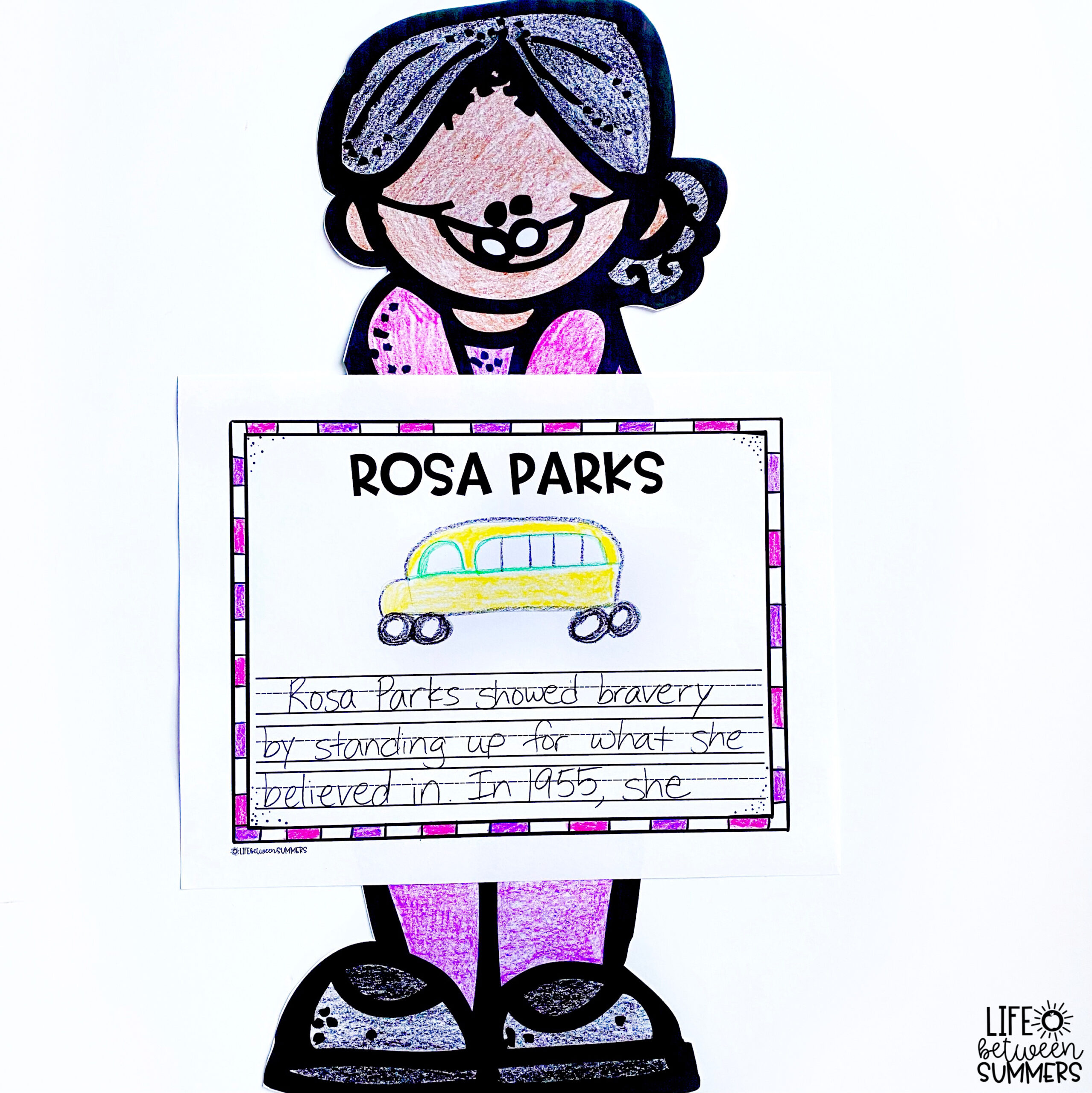
You could have students write in either the informational or opinion genre. For opinion writing, you might ask students to respond to the text by asking guiding questions like “Why do you think Rosa Parks is a hero?” or “How do you think Rosa Parks felt when she was asked to give up her seat on the bus?”
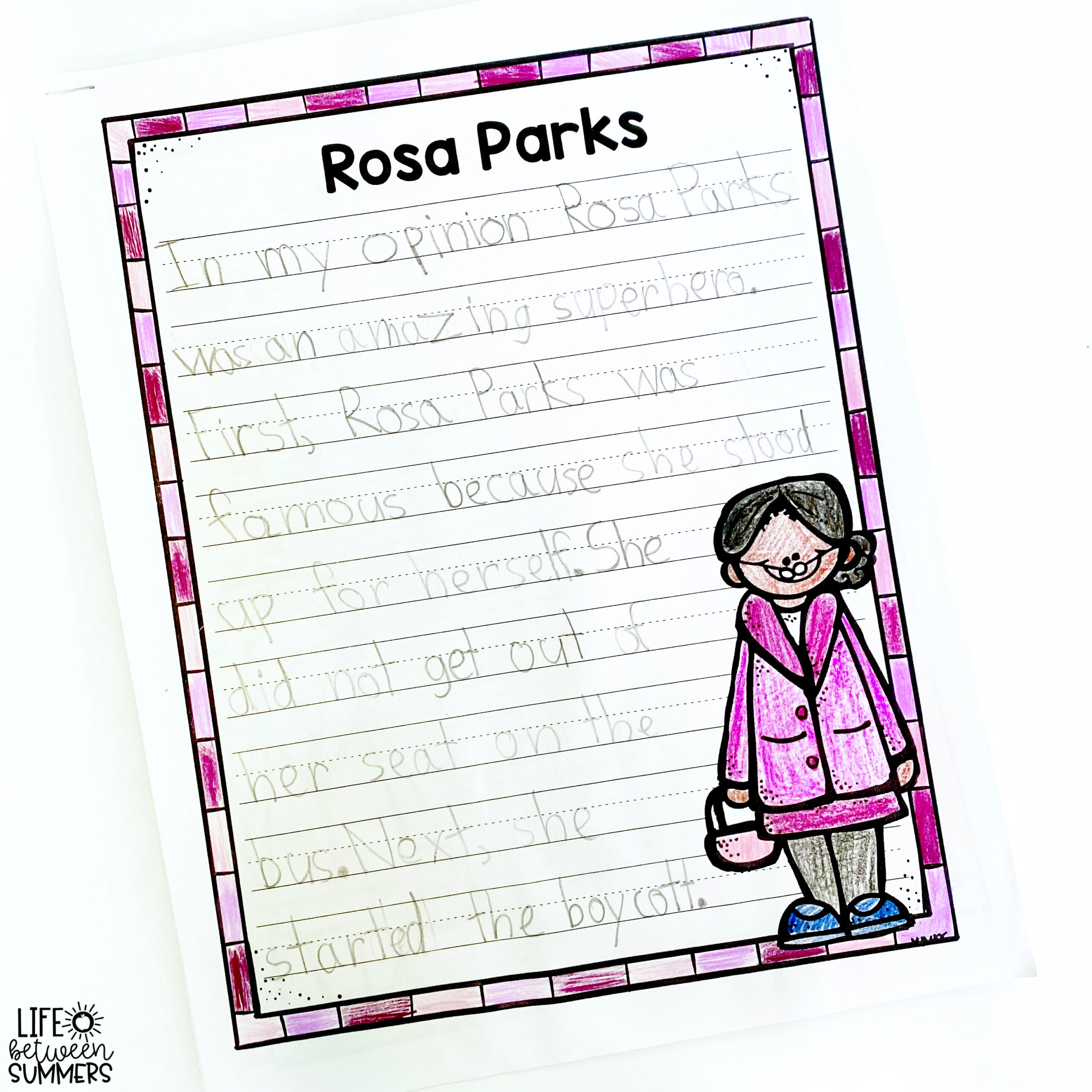
ROSA PARKS BUS CRAFT
In addition to the Rosa Parks Close Reading and Writing, students can get to create a comprehension and writing craftivity where they make the iconic bus that Rosa Parks sat on.
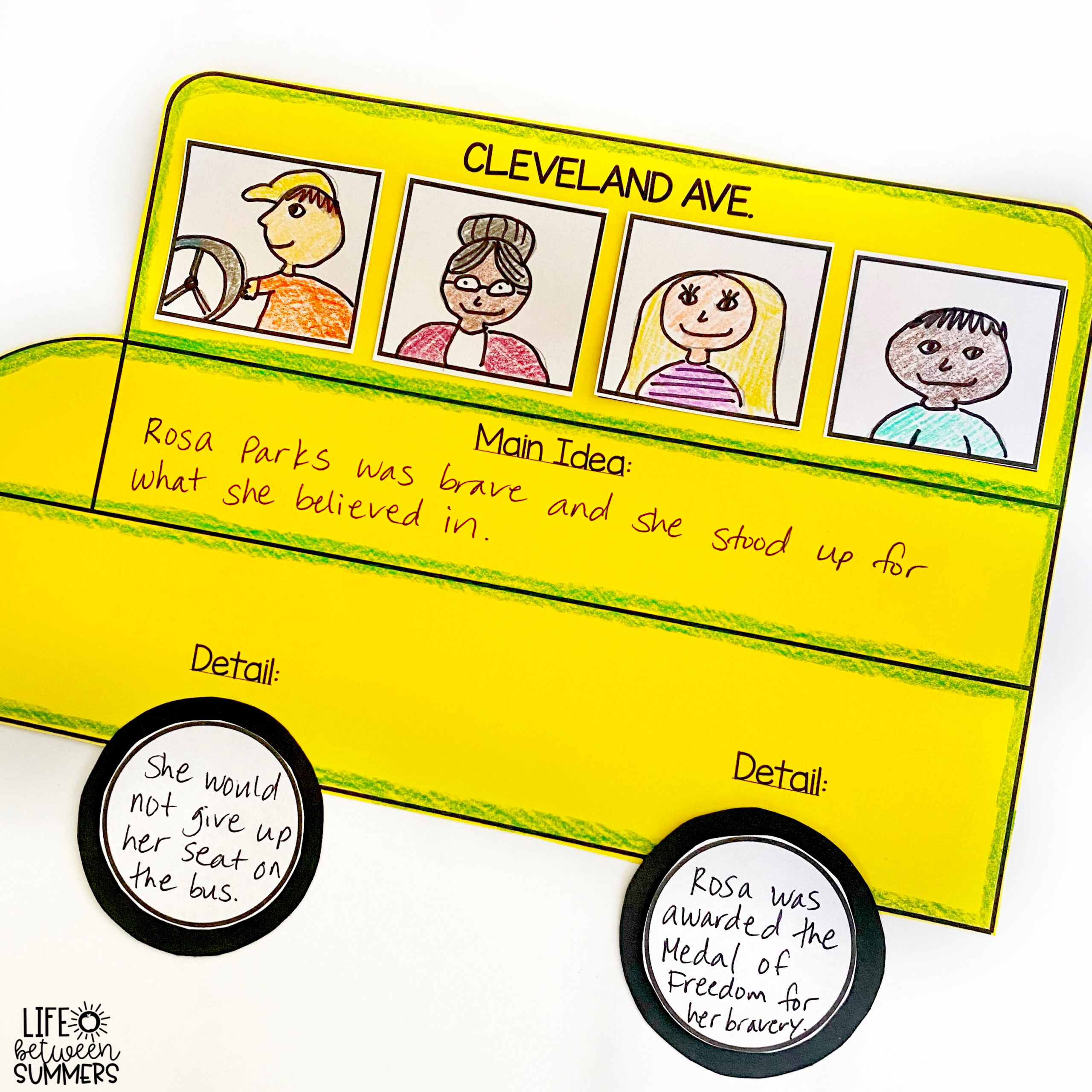
They write the main idea on the body of the bus and list supporting details on the tires. Then, students draw passengers riding in each of the windows of the bus. They color the pieces and assemble the bus by cutting and pasting everything together.
Here are a two tips for this Rosa Parks Bus Activity:
- Have them write the main idea & details on a white board or separate sheet of paper first. Then you can check it together before starting the craft. This helps prevent a lot of erasing on the actual bus.
- Suggest that in their drawings they include a steering wheel for the driver. Also, ask them to paste their picture of Rosa Parks in the second square so that she’s riding in the front of the bus.
Where to Get Rosa Parks Activities & More Resources
All of the Rosa Parks activities I’ve shared are available right here on my website, or on TPT.
You also might want to check out this blog post. In it, you’ll find more ideas for using close reading and writing activities about other important American historical figures.

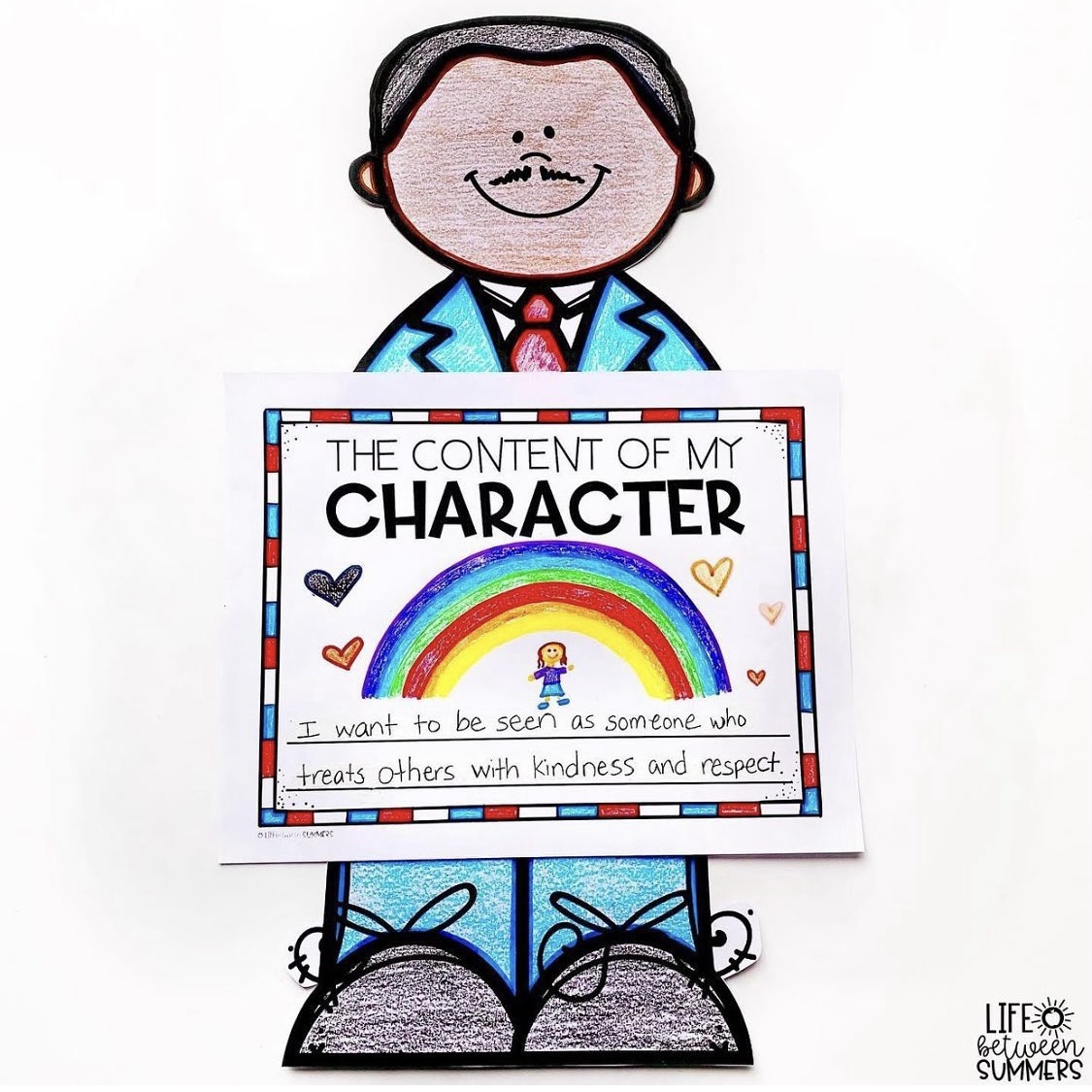
Are you planning to honor Martin Luther King Jr. along with Rosa Parks this school year? You can find similar activities for MLK right there. Including this writing craft, which doubles as a social emotional lesson.
I hope these Rosa Parks activities might help contribute to your class discussions and lessons on Rosa Parks, as students may gain a depth of understanding about the value of her story. Specifically, the importance of standing up for injustice whenever we see it. May they be inspired to stand up (or sit down!) for what they believe is right.